QUITENSIS var. QUITENSIS
Synonyms :
Echeveria aequatorialis Rose ex von Poellnitz (1935)
Echeveria columbiana von Poellnitz (1935)
Echeveria quitensis var. gracilior Sodiro ex von Poellnitz (1935) (nom. inval. Art. 34.1a).
Echeveria quitensis var. sprucei (Baker) Poelln. (1935)
Echeveria pachanoi Rose ex von Poellnitz (1935)
Distribution : Colombia, Ecuador.
First Description as Sedum quitense Kunth, Nova Genera et Species Plantarum VI: 46, 47. 1823 :
Stems terete, glabrous.
Leaves alternate, sessile, spathulate-lanceolate, slightly acute, fleshy, convex below, flat above, absolutely entire, glabrous, 4.5 – 4.7 cm long or more, 11,25 mm wide.
Raceme elongate, erect, many-flowered.
Flowers scattered, pedicellate, orange, flowers have the same size as those of E. bicolor.
Pedicels 9 mm long, glabrous, with one bract, glabrous as well as rachis.
Bracts lanceolate, fleshy.
Calyx 5-parted, glabrous, persistens, sepals ovate-lanceolate, acuminate, flat, half the size of the corolla.
Petals 5, inserted in the calyx, oblong, acuminate, base broad, fairly flat, outer side carinate, glabrous, equal, spreading.
Cytology : n = 22.
Amended description by G. Pino in CSJ US 92(1), 2020 :
A succulent glabrous herb with conspicuous branched stems. Primary root a short taproot, secondary roots fibrous from sides of tuberous roots, short.
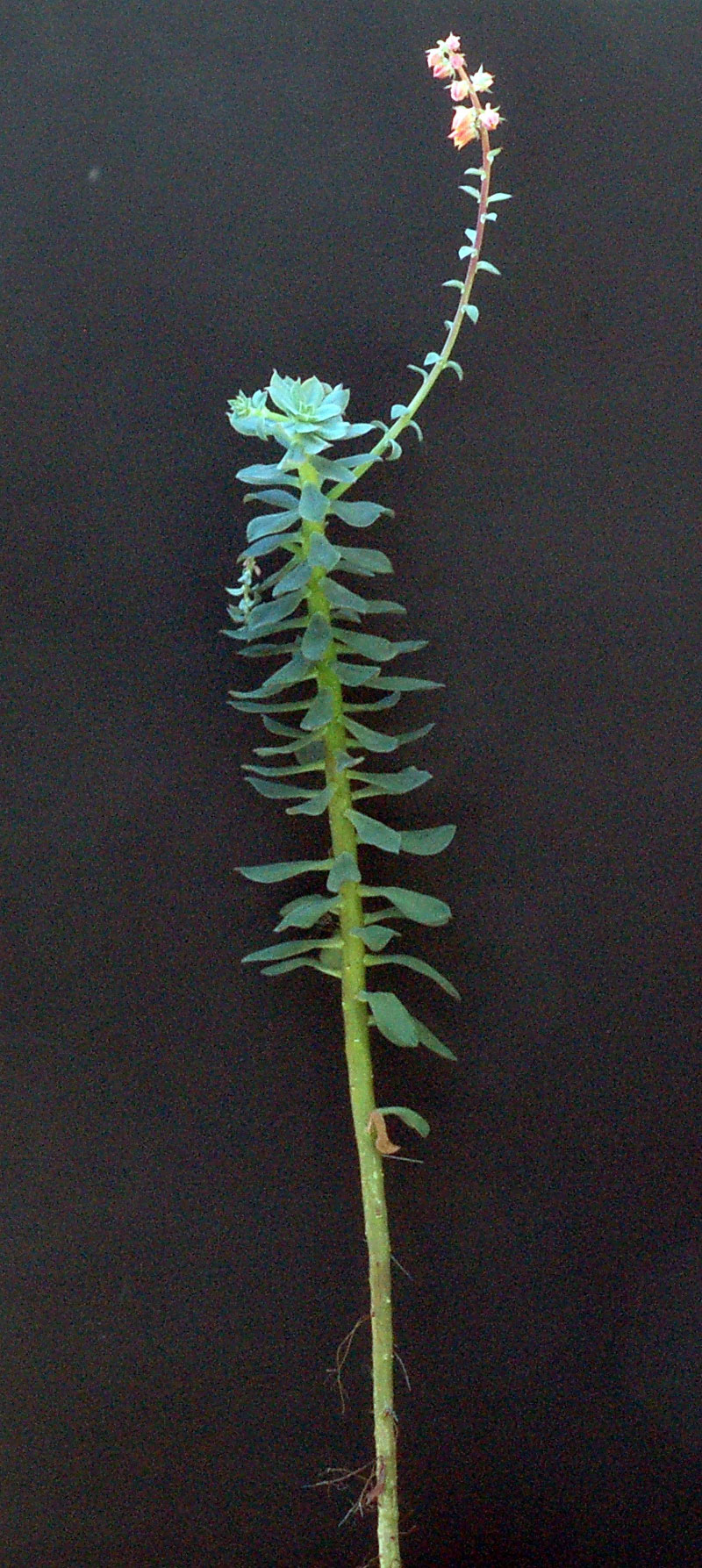
Stem aerial, erect when young, sometimes decumbent in old plants growing on vertical walls, simple when young or many branched alternately, 0.8–2 cm diam. at base, gradually tapering, light grayish brown at base, later greenish or redder, light green near apical leaves.
Branches 2–30, born from base or alternately every 5–10 cm, 0.4–1 cm diam. at base, 0.3– 0.8 near tips, 10–50 cm long or more in very old plants.
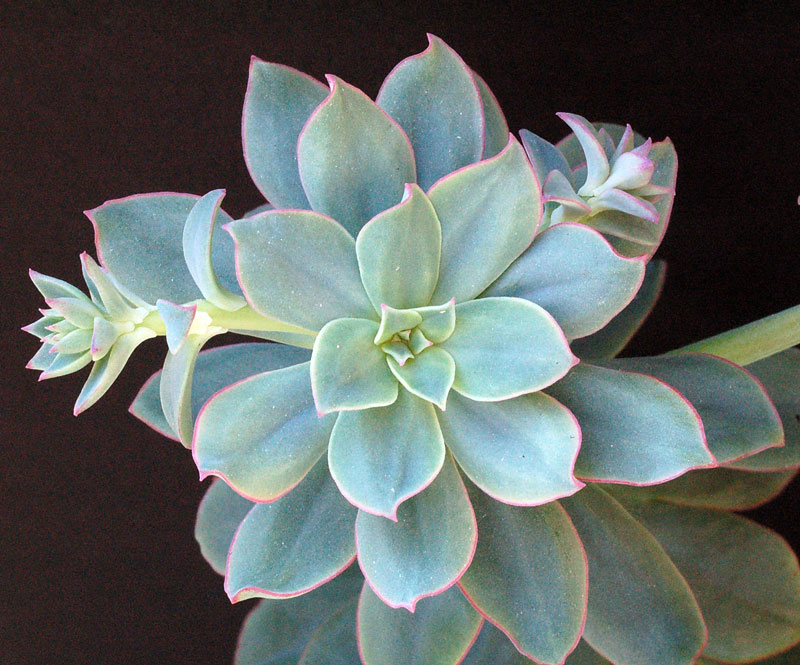
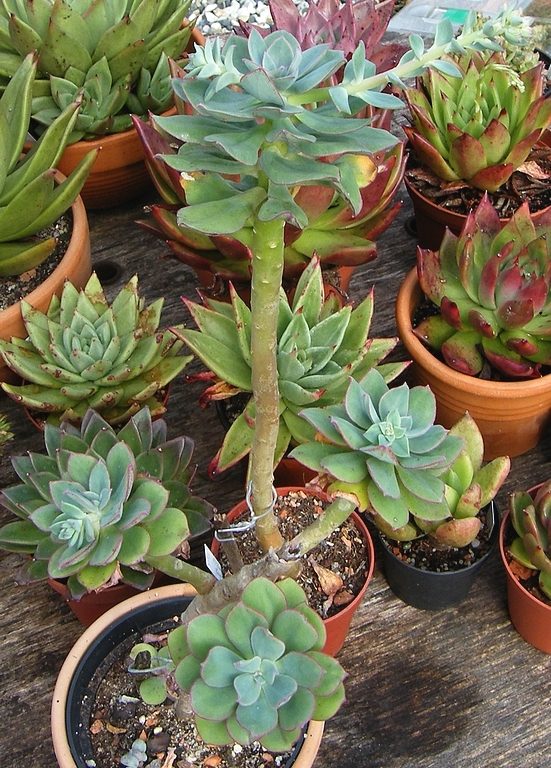
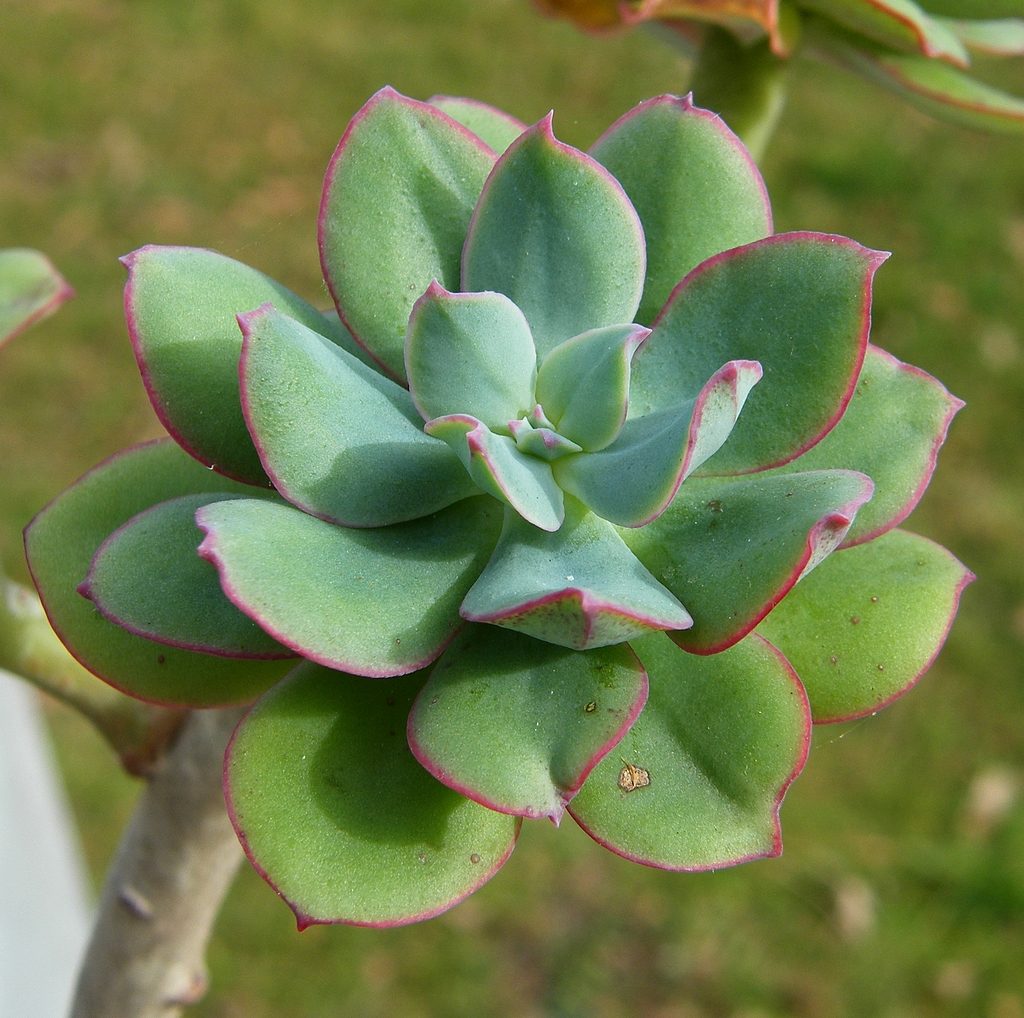
Rosettes one at the end of stem or branch, (4–) 6–9 cm diam. Leaves (10–) 18–30, present at the distal 3–7 cm, rarely present below, crowded at the apex, narrowly obovate, sessile, slightly incurved, 2–6 cm long, 0.3–0.6 cm wide at base, 0.4–0.8 cm wide at proximal third, 0.7–1.3 cm wide at middle, 1.2–1.8 cmwide at distal third, 5–6 mm thick at base, 3–4 mm thick at the middle, upper side flat to channelled at distal half, light glaucous green, somewhat pruinose, reddish at margins and tips, lower side flat or with recurved margins, slightly lighter than upper side, with central nerve prominent; reddish at margins, distal third, central nerve and sometimes near base, apex obtuse or rounded, with an acute mucro 0.5–1 mm long.
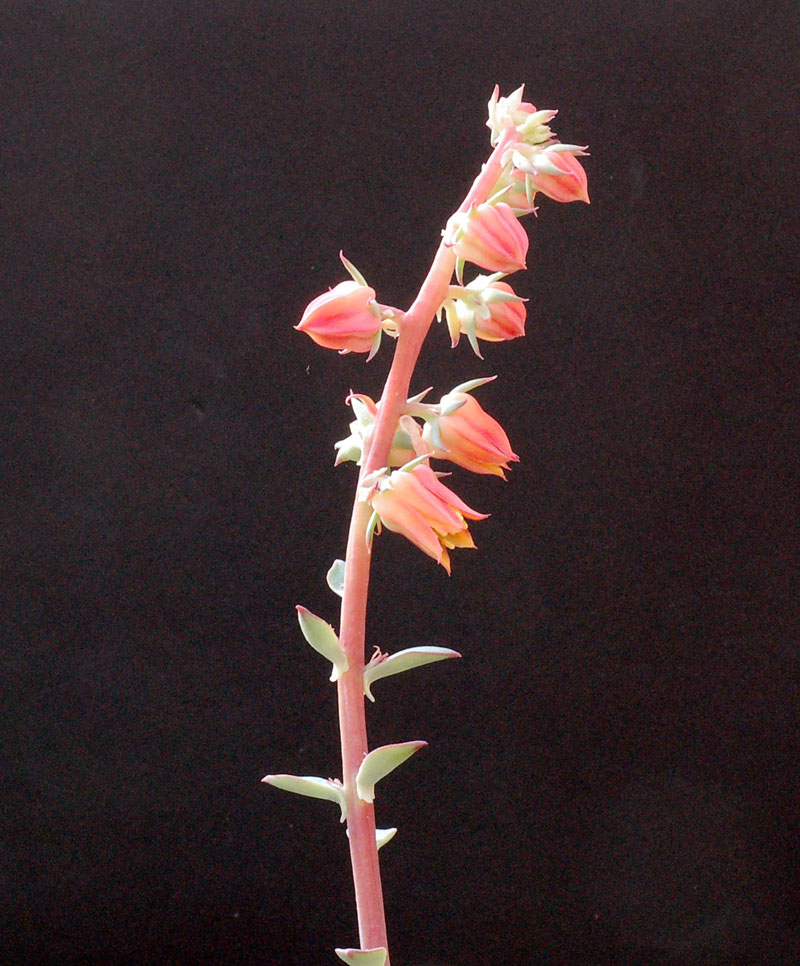
Flowering stem usually 1 equilateral or unilateral raceme, rachis 15–25 cm long, 5–6 mm diam. at base, 1.5–2 mm diam. at apex, light pink at base, dark pink distally. Peduncular bracts 20–25, at proximal half of stem, spaced 2–4 mm apart at base and 4–6 mm more distally, obovate, erect, 1–1.7 cm long, 0.4–0.9 cm wide, 1.5–2 mm thick, flat or channeled in upper side, subcarinate in lower side, same color as leaves.
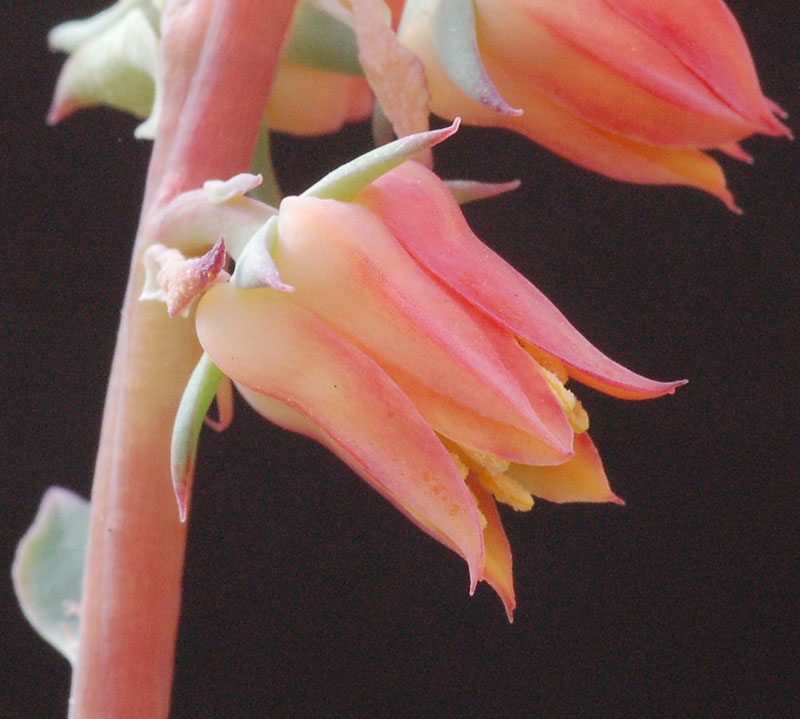
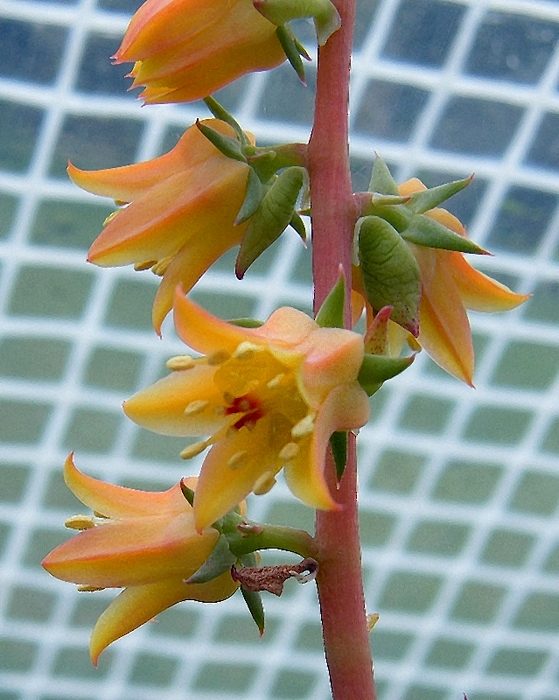
Flowers 8–16 (–20), 0.8–1 cm long and 0.5–0.6 cm diam. Pedicels 2–4 mm long, longer in lower flowers, oblique or ascending, 1–1.2 mm diam., same color as flowering stem, with 1 small oblong bracteole at base, and 1–2 along the pedicel, 3–7 mm long, 0.5–1 mm wide. Sepals united at base, unequal, narrowly triangular, acuminate, erect or inserted in 30-45°, some reflexed, inner side concave, outer side subcarinate, 4–7 mm long, 1.5–2 mm wide, glaucous green, reddish at tips and keel. Flower buds ovoid, 0.6 diam. × 0.8 cm long, dark pink. Corolla subprismatical, 0.5–0.6 cm thick near base, 3.5–4 mm thick near apex, 0.8–0.9 cm long, petals oblong to narrowly ovate, acute, 0.8–0.9 cm long, 2.5–3 mm wide, outer surface keeled, dark pink, apex slightly recurving, inner surface yellow. Stamens 10, the 5 epipetalous 5–5.5 mm long, the antesepalous 6.5–7.5 mm long, filaments cream, 0.6 mm thick at base, gradually tapering to 0.3 mm. Anthers ovoid, yellow, 1–1.2 mm long and 0.4–0.6 mm wide. Gynoecium ovoid, 6–7 mm long, 3.5–4 mm thick. Carpels 5, cream. Styles 2–2.5 mm long, parallel, almost touching each other, dark red. Stigma dark red. Nectaries reniform, cream,1–1.2 × 0.2–0.3 mm. Fruit a dehiscent capsule 0.4–0.6 cm long, 1.2–1.5 cm diam., dark brown .
Flowering time September to December.
Note :
1. An extremely variable taxon in leaf shape and colour. Similar to E. bicolor, but more branched. In spite of the different chromosome numbers (E. bicolor n = 21, E. quitensis n = 22), these two species seem to be closely related (Uhl, Haseltonia 12, p. 39, 2006).
2. As stated above, the type of E. quitensis is from Quito, Ecuador. Walther's description of E. quitensis (Echeveria, 287 - 289, 1972) however is from a plant grown from seeds collected in southern Colombia. That means it is not only of no use but rather misleading. This is also true for the short description by M. Kimnach in the Illustrated Handbook of Succulent Plants, 2003, which is based on Walther.
3. In his revision of genus Echeveria in Ecuador (CSJ US 92(1), 2020) G. Pino reduced the former E. quitensis var. sprucei to a synonym of E. quitensis var. quitensis and created the new var. cuencaensis.
Photos of E. quitensis on iNaturalist :
https://www.inaturalist.org/observations/243240771
https://www.inaturalist.org/observations/313008161
E. quitensis near Papallacta, Ecuador :
E. quitensis près de Papallacta, Equateur :
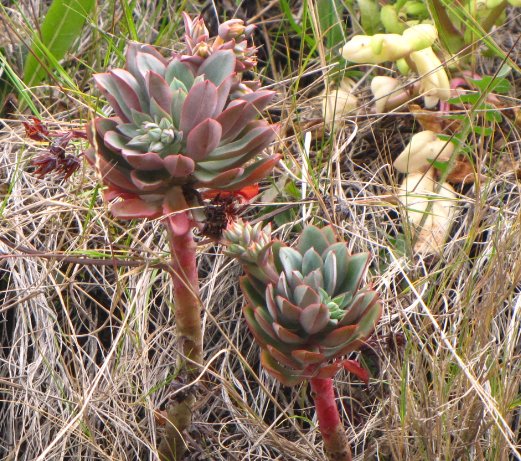
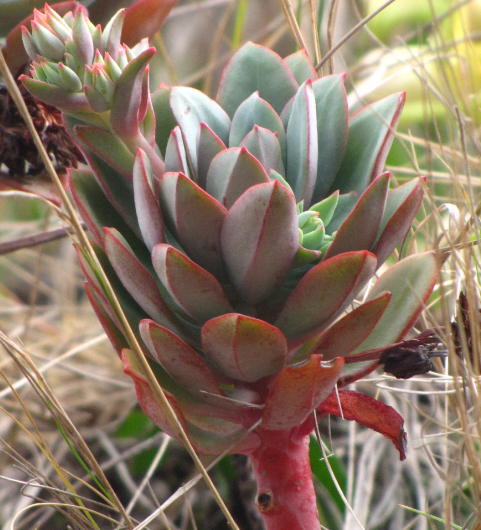
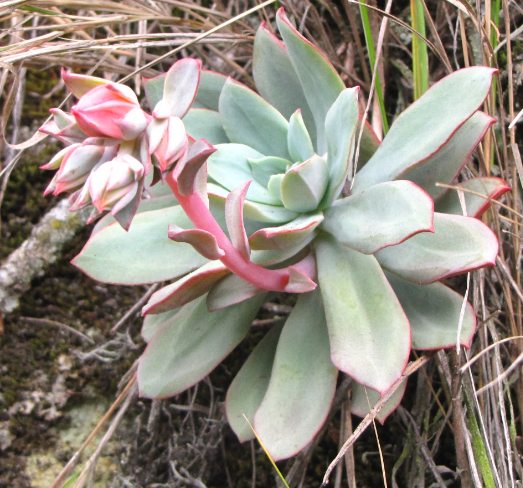
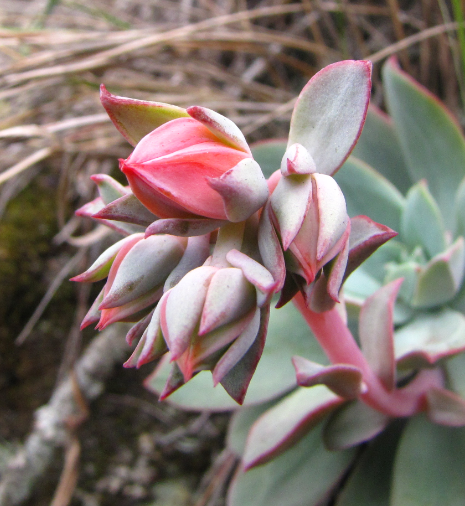
E. quitensis near Baeza, Ecuador :
E. quitensis près de Baeza, Ecuador :
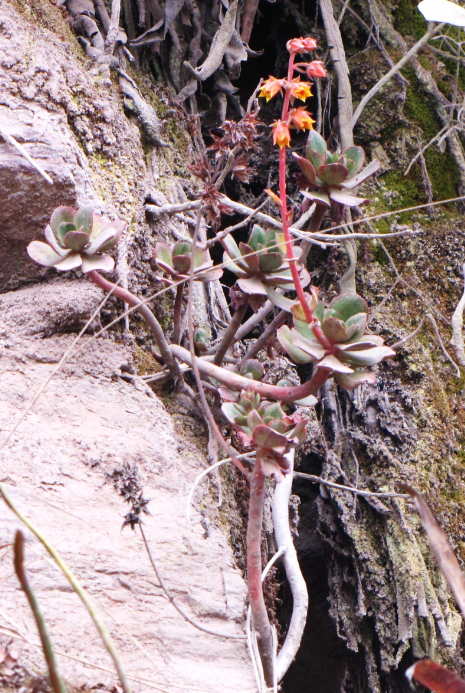
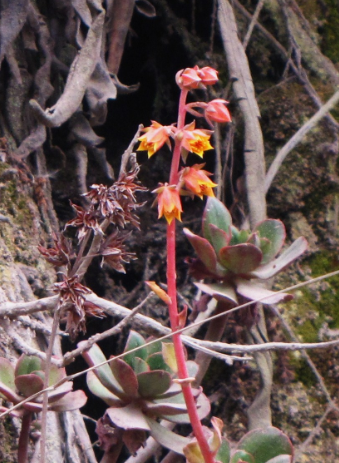
Yet another population :
Encore une autre population :
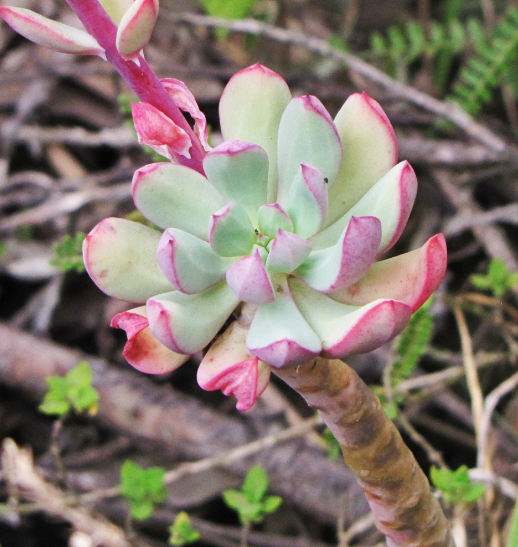
Photos Guillermo Rivera