OVATA Tolkien Group (engl./ fr.)
Crassula ovata Tolkien Group
Origin:
A mutation from the species Crassula ovata, arising in cultivation prior to 1980 and changing randomly since then. It has been said to be a hybrid with Crassula lactea, but that is very unlikely. The cause is most likely to be a mycoplasma, which are immobile bacteria with no cell walls, causing a mutation of normal Crassula ovata.
Description:
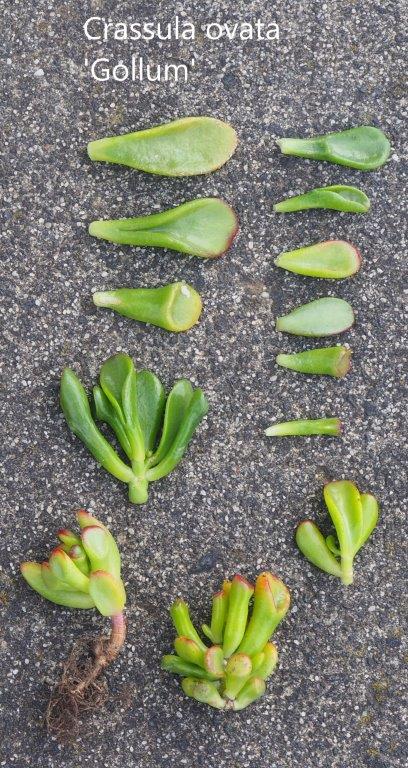
Leaves cylindrical, terete or variously flattened, a result of leaves inrolling and fusing together. Leaf-tips more or less sunk at the tip in the form of an elliptic, mostly oblique umbilicus, or with a lenticular dimple just below the tip. Usually of a lively strong glossy green, or more rarely bright red, mainly at the tips or margins. Smaller than the normal species and seldom rising to more than about 30cm in height. Prone to producing frequent reversions to normal stems.
Etymology:
The first two cultivars comprising this Group were named after characters in the Tolkien Legendarium. The fictitious characters of J. R. R. Tolkien's series of children's high fantasy books, the first of which was published in 1937 entitled The hobbit, the best-seller 3-volume Lord of the rings trilogy (1954-55), and collectively known as Tolkien's Legendarium, have now given their names to the earliest two selections within this Group.
'Hobbit' appears to have been the earliest name to have received a description, in the Abbey Garden Cacti & Succulents Catalogue (1979), as Crassula portulacea 'Hobit' [this mis-spelling is a correctable unintentional error for 'Hobbit']. There is a description but no illustration (nor in later catalogues). Here the leaves are rolled back at all edges to form a slightly flattened cylinder and there is a lens-shaped dimple just below most leaf tips is the only free part that remains. According to Tolkien, a hobbit is a 'hole-dweller'.
See also Roy Mottram : Crassula ovata Tolkien Group
---------------------------------------------------------------------------------------
Origine :
Une mutation de l'espèce Crassula ovata, apparue en culture avant 1980 et ayant depuis changé aléatoirement. On a dit qu'il s'agissait d'un hybride avec Crassula lactea, mais c'est peu plausible. La cause la plus probable en serait un Mycoplasma, bactérie immobile dépourvue de paroi cellulaire, qui aurait fait muter la Crassula ovata normale.
Description:
Feuilles cylindriques, arrondies ou différemment aplaties : résultat de feuilles s'enroulant et fusionnant ensemble. Le bout de la feuille est plus ou moins enfoncé, de forme elliptique, comme un nombril oblique, ou avec une sorte de fossette en dessous de ce bout. D'un vert brillant, ou plus rarement d'un rouge vif (principalement au bout et sur la marge). Plante plus petite que l'espèce normale, et atteignant rarement plus de 30 cm de haut. Susceptible de produire des tiges revenues à la normale.
Etymologie :
Les deux premiers cultivars de ce groupe furent nommés d'après les personnages du légendaire de Tolkien . Ces personnages fictifs sont tirés de la série d'ouvrages fantastiques pour enfants de J. R. R. Tolkien, dont le premier fut publié en 1937 et intitulé Le Hobbit, avant la trilogie du Seigneur des Anneaux (1954-55).
'Hobbit' semble avoir été le premier nom à recevoir une description, dans Abbey Garden Cacti & Succulents Catalogue (1979), en tant que Crassula portulacea 'Hobit' (cette faute d'orthographe involontaire a été corrigée depuis en 'Hobbit'). Il y a une description mais pas d'illustration, ni dans les catalogues suivants. Chez 'Hobbit', la marge des feuilles s'enroule par-dessous pour former un cylindre légèrement aplati, et il y a un creux en forme de lentille juste au-dessous du bout de la plupart des feuilles. Selon Tolkien, un Hobbit vit dans un trou.
Voir aussi Roy Mottram : Crassula ovata Tolkien Group
--------------------------------------------------------------------------------------
'Gollum' first appeared in print in the Grigsby Nursery Wish Book (1981). There is a description but no illustration in that particular catalogue, but one does appear in the 1982 edition. That is the largest, most vigorous and commonly seen form where the leaf tips are highly modified and deeply umbilicate.
'Gollum' apparut d'abord dans la publication Grigsby Nursery Wish Book (1981). Dans ce catalogue, l'on n'y trouve qu'une description ; l'illustration fut publiée dans l'édition de 1982. C'est la plus grande forme, la plus vigoureuse et la plus rencontrée, et celle dont le bout de la feuille est le plus modifié et profondément ombiliqué.
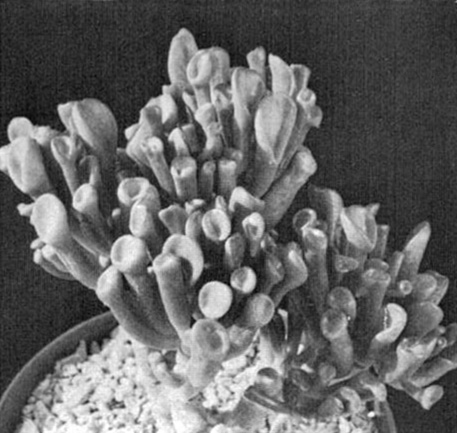
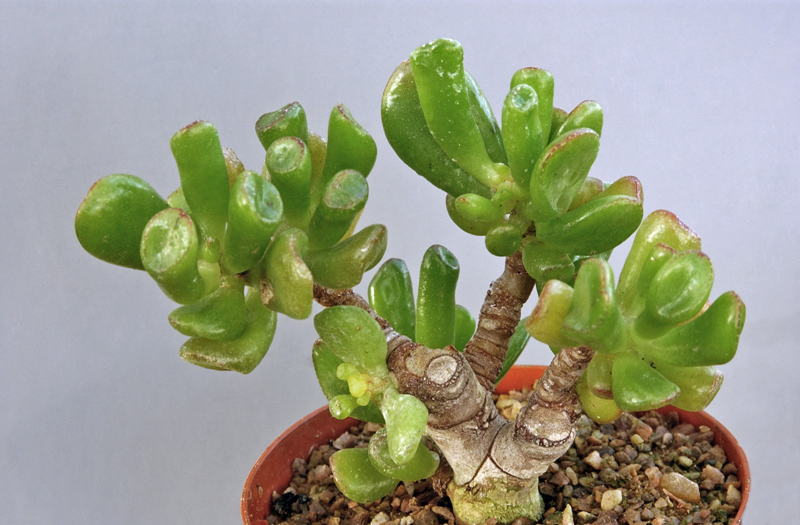
A typical Tolkien Group plant with a variety of leaf shapes, probably 'Gollum'. Leaves up to 3.5cm. long & 1.8cm. broad.
Photo Roy Mottram
'Gollum' :
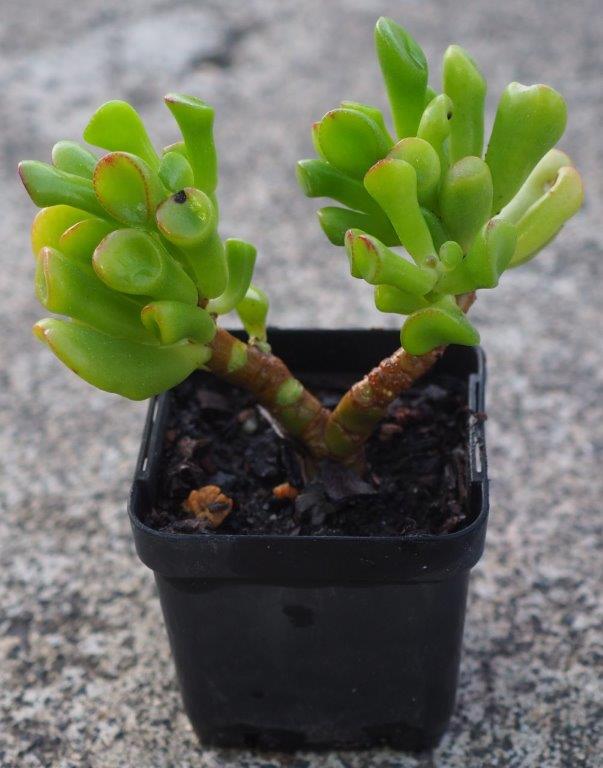
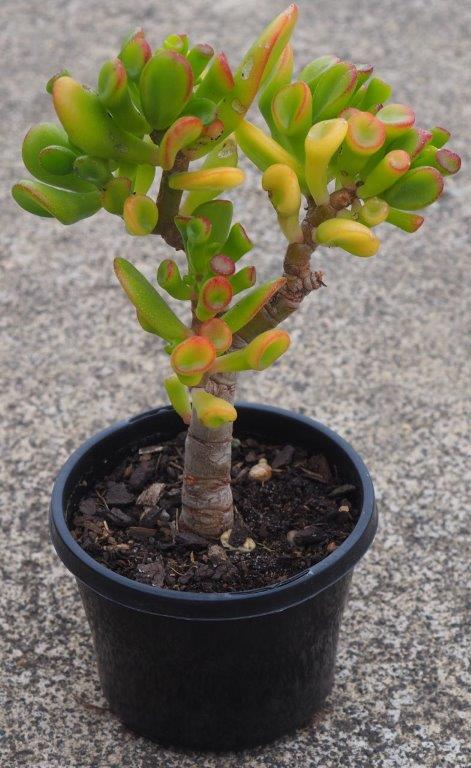
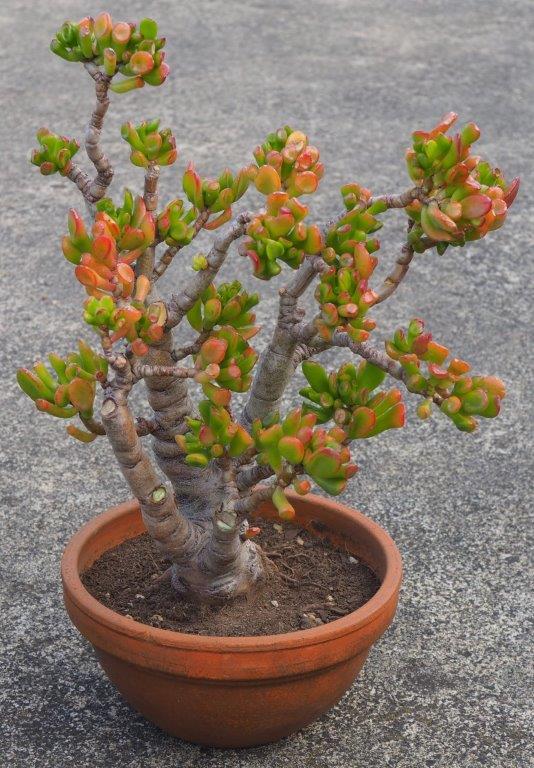
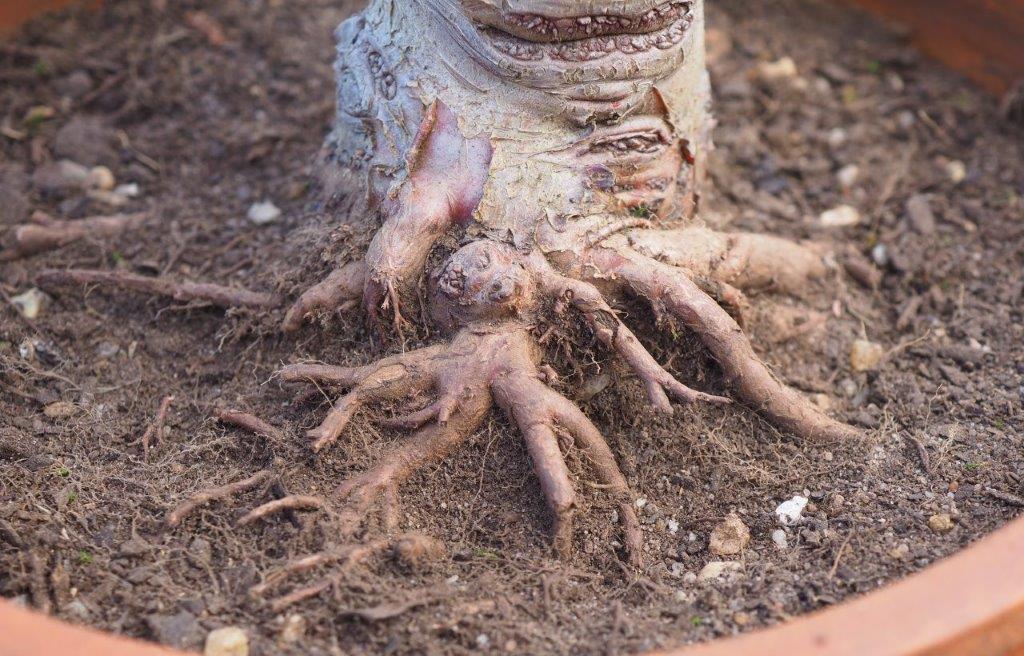
A very old plant :
.jpg)
Stem diameter 9.5 and 5 cm :
.jpg)
A pachycaul ‘Gollum’ :
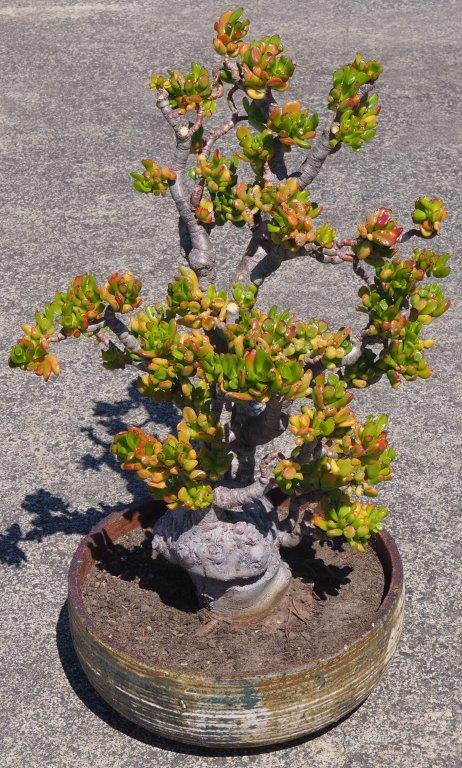
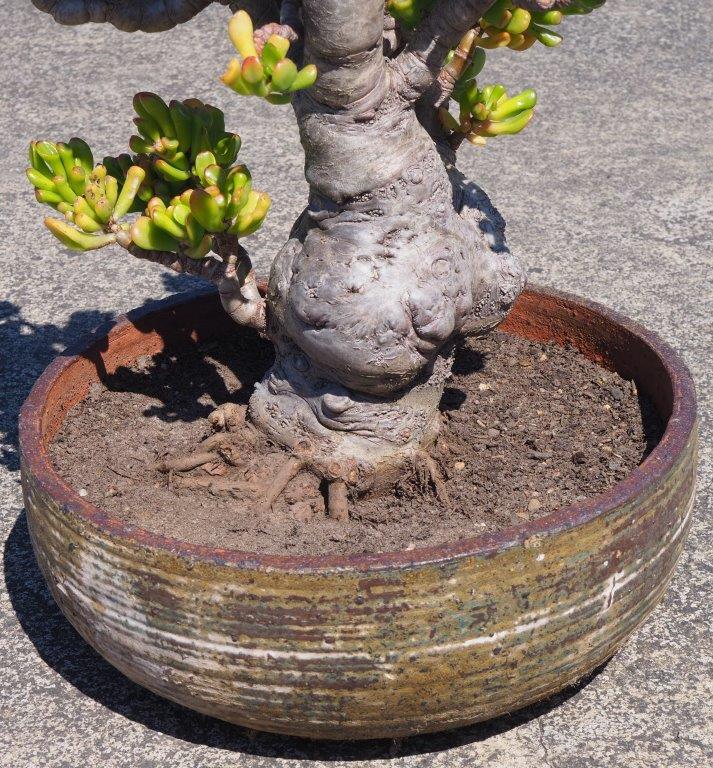
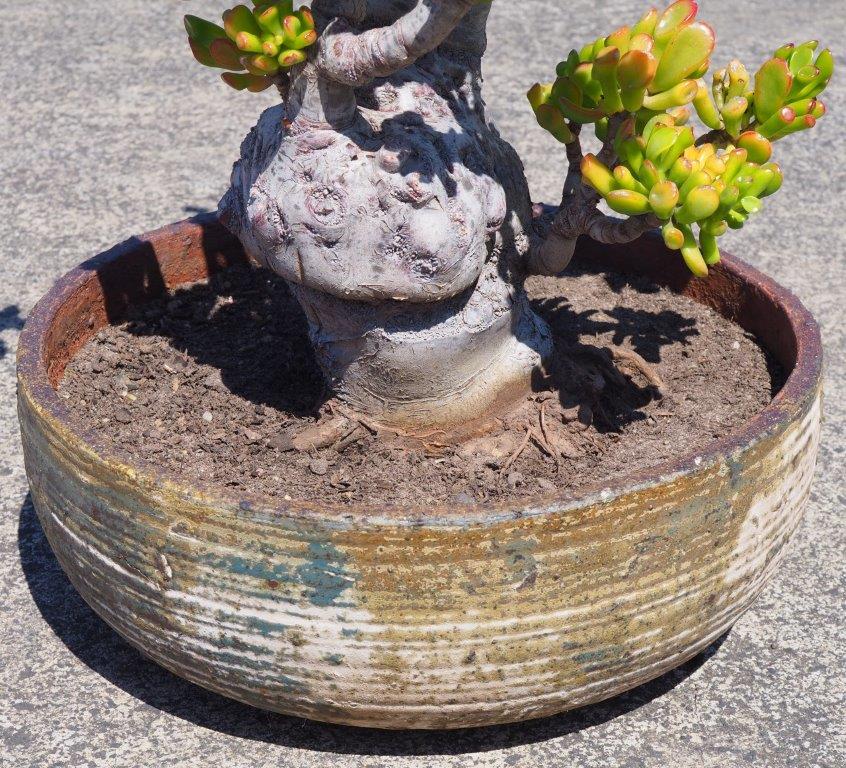
Photos Santino Rischitelli
'Gollum' in flower :
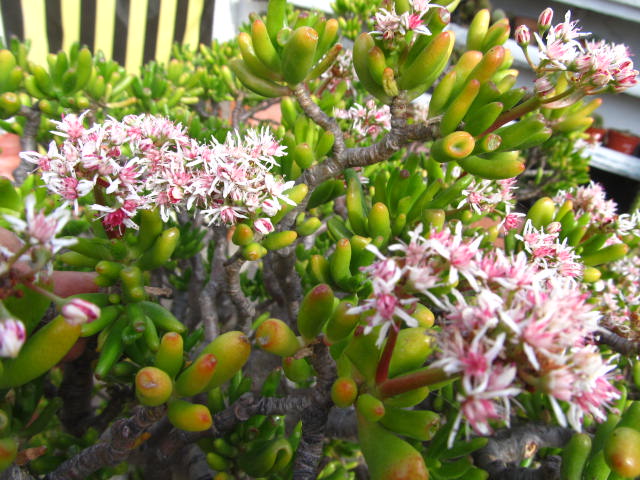
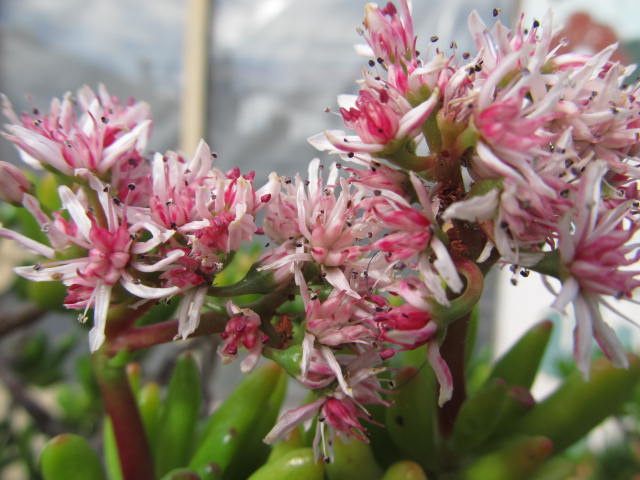
Photos Julio C. Garcia
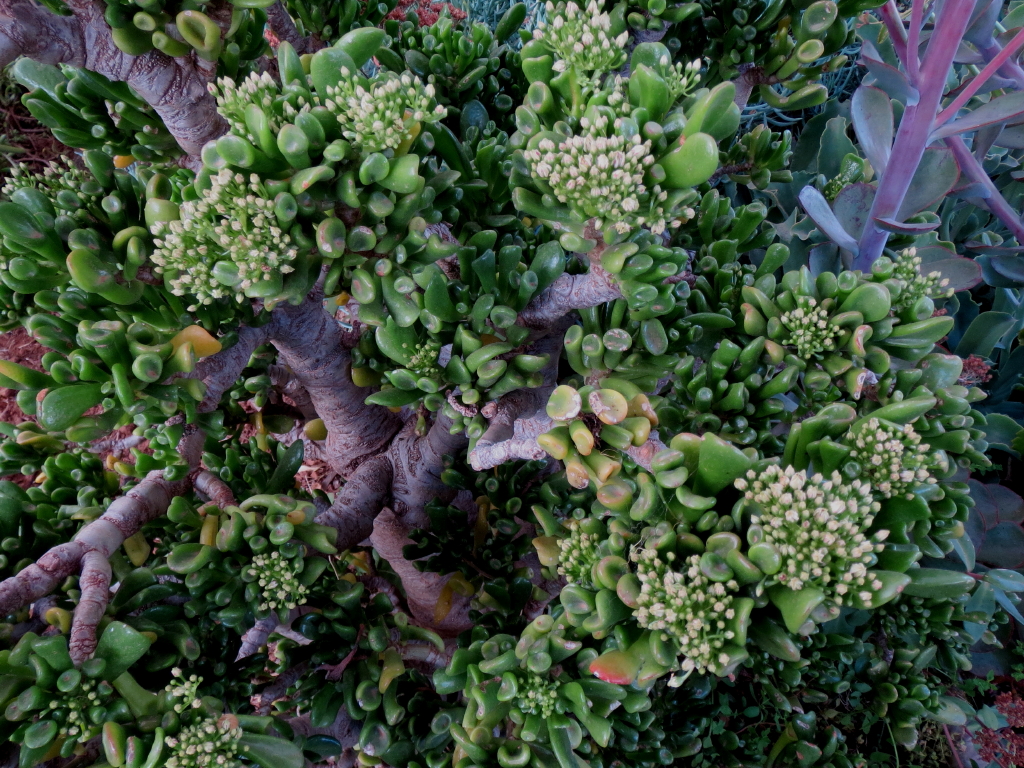
Photo Noelene Tomlinson
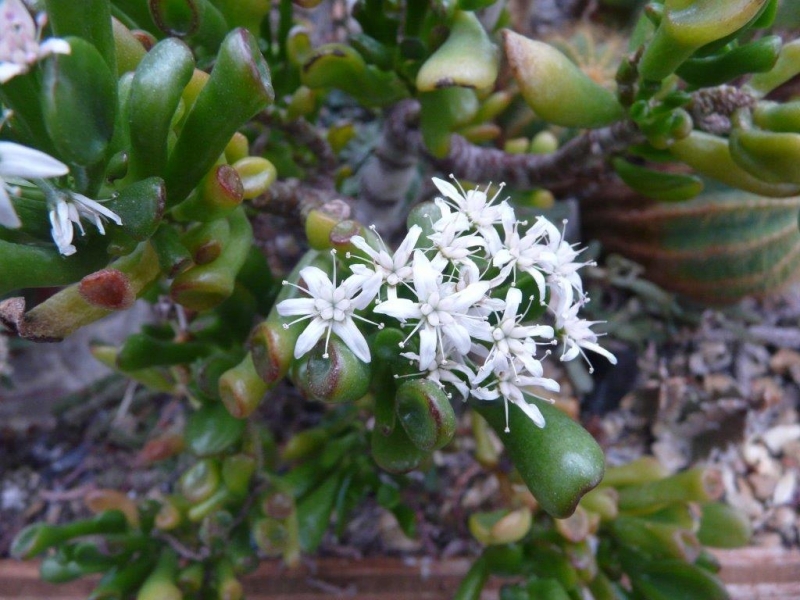
Photo Margrit Bischofberger
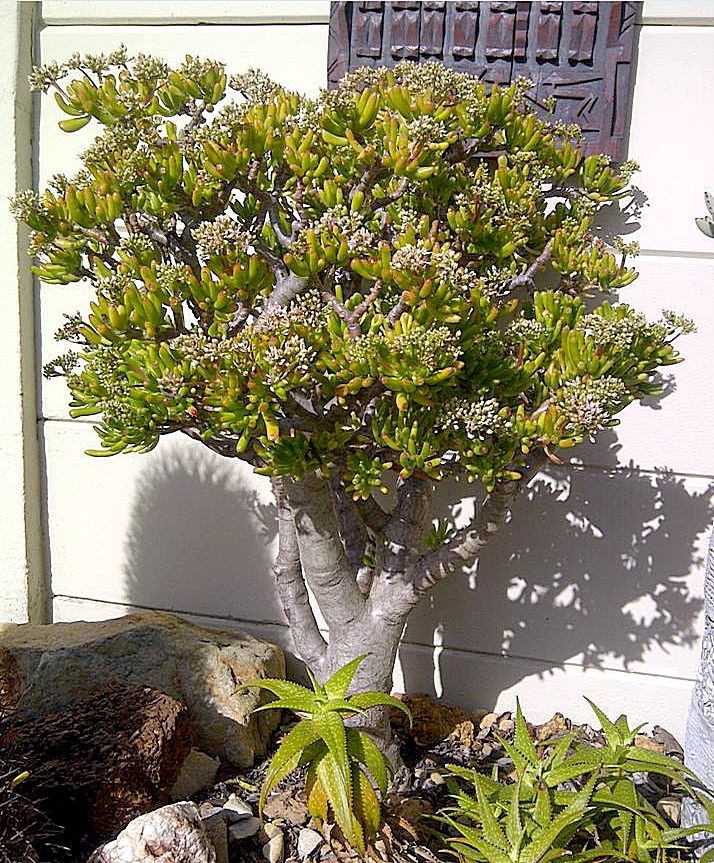
Kobus Maritz collection
Photo Paul J. Green
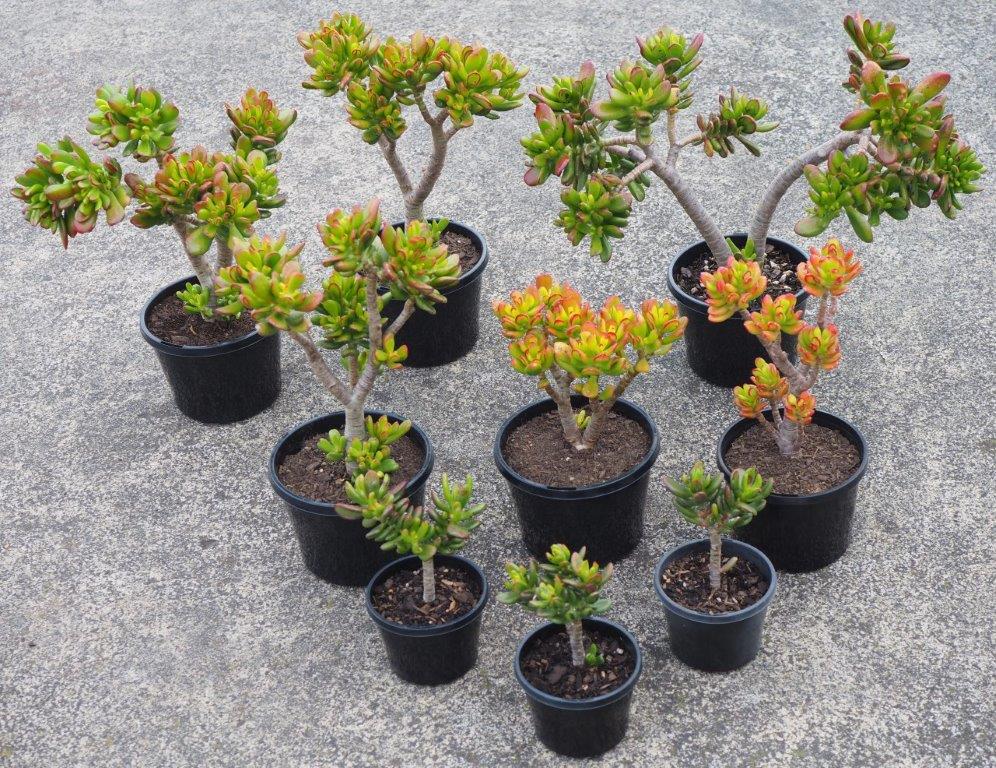
Crassula ovata ‘Hobbit’ - aka C. ovata ‘Horn Tree’ :
Different leaf colours and size of leaves of C. ovata ‘Hobbit’ are the result of growing conditions : Exposure to the sun, seasons, soil, size of pots and no or frequent repotting.
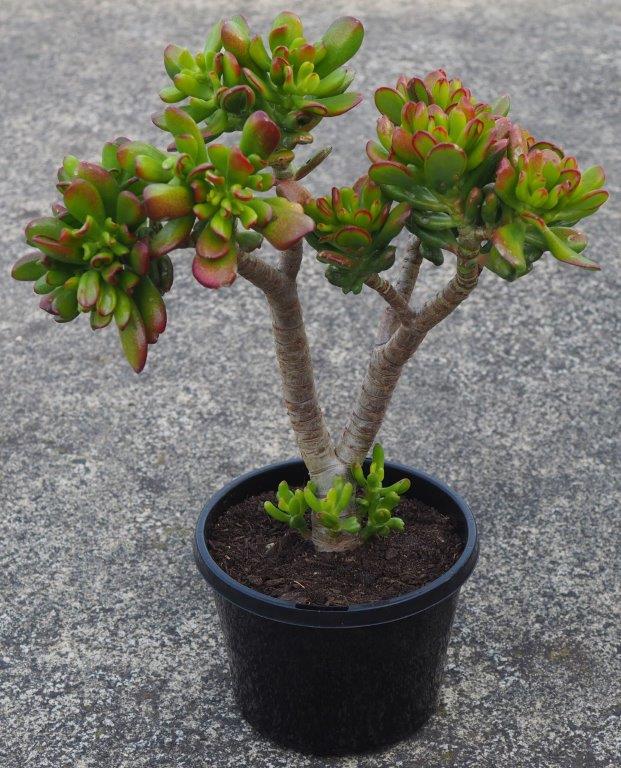
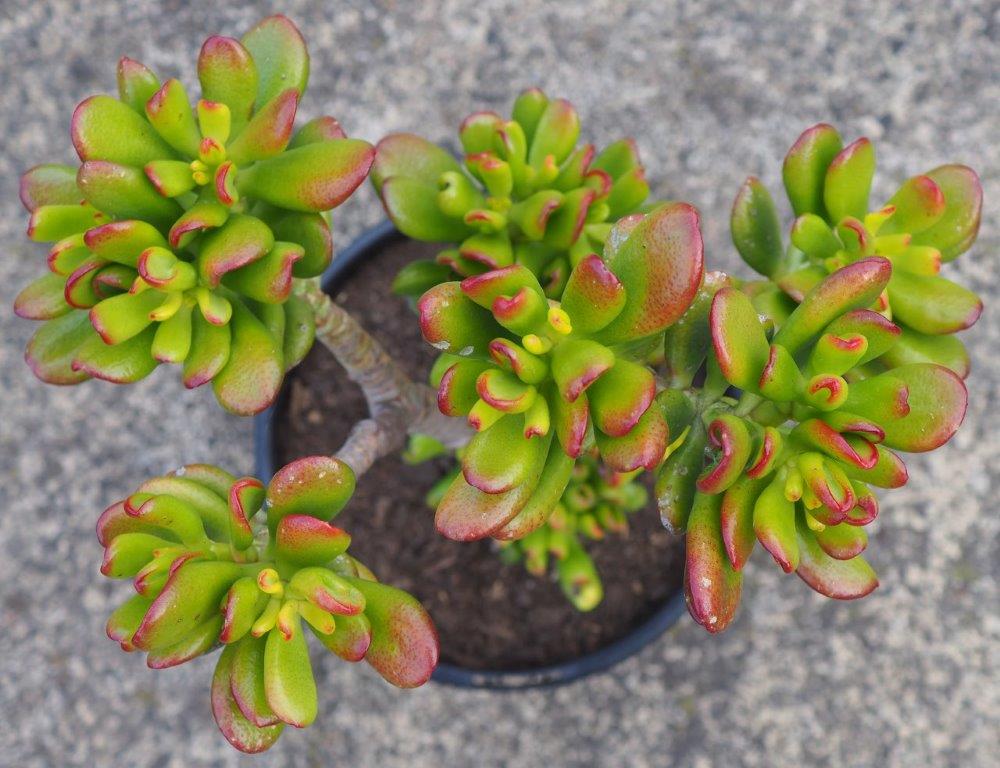
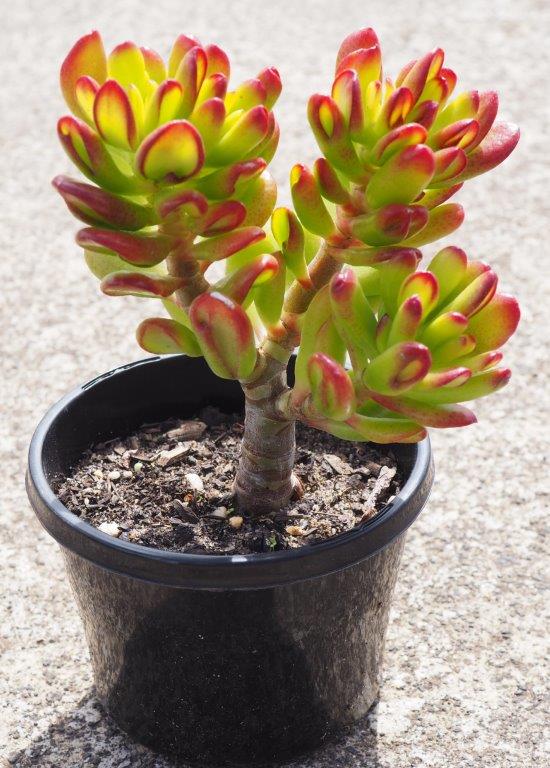
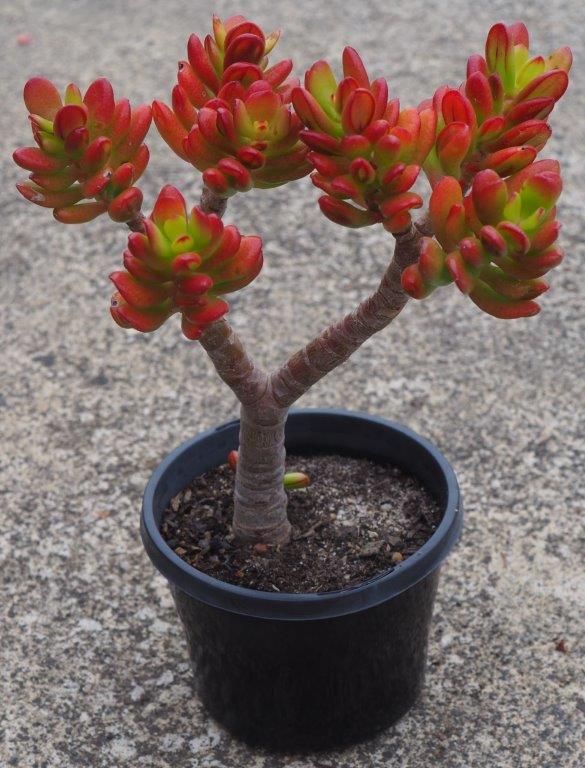
.jpg)
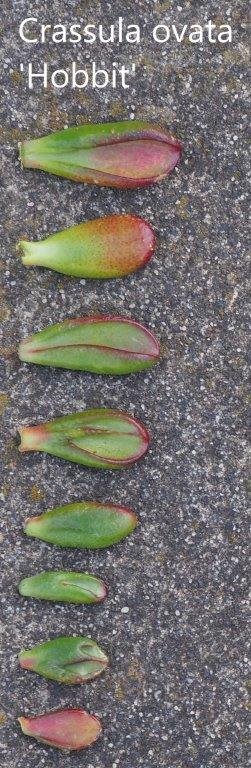
Photos Santino Rischitelli
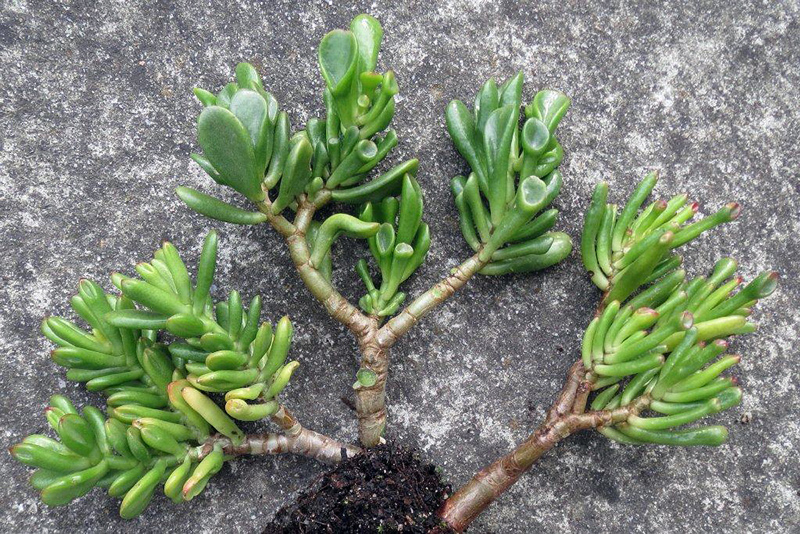
Photo: Noelene Tomlinson
C. ovata 'Hobbit' in flower :
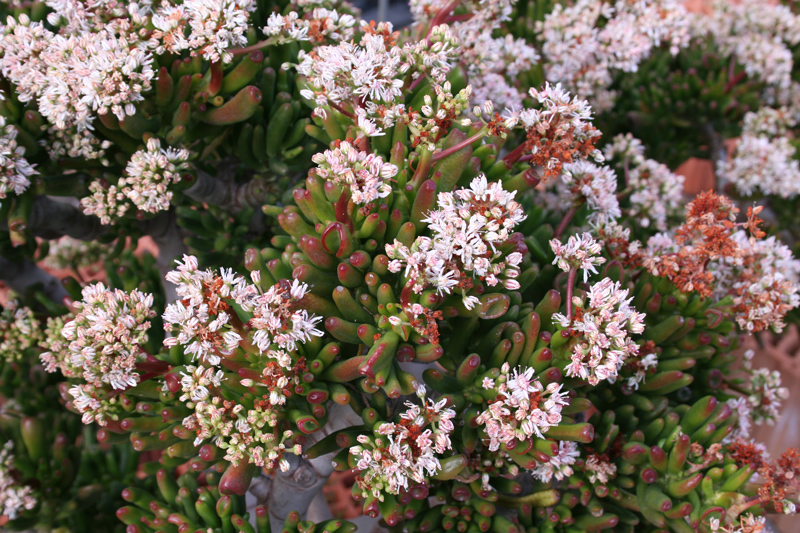
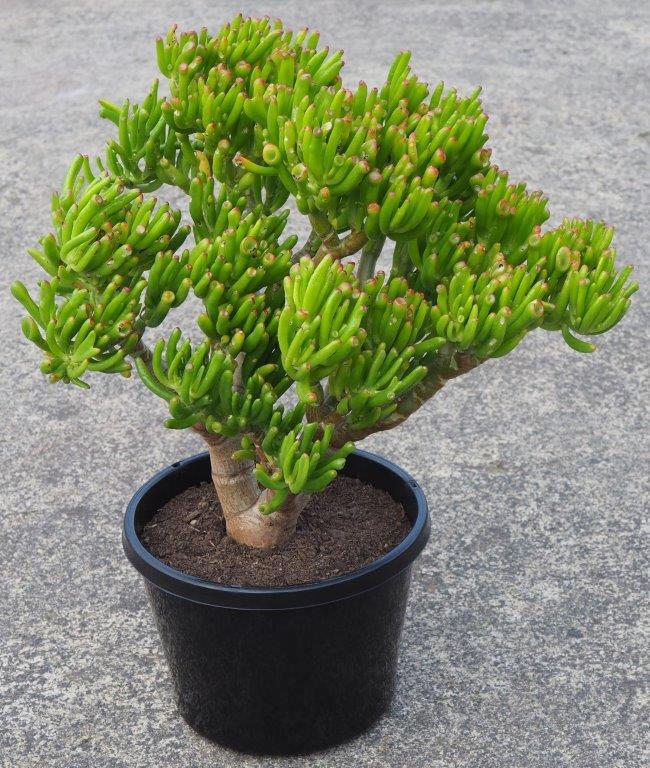
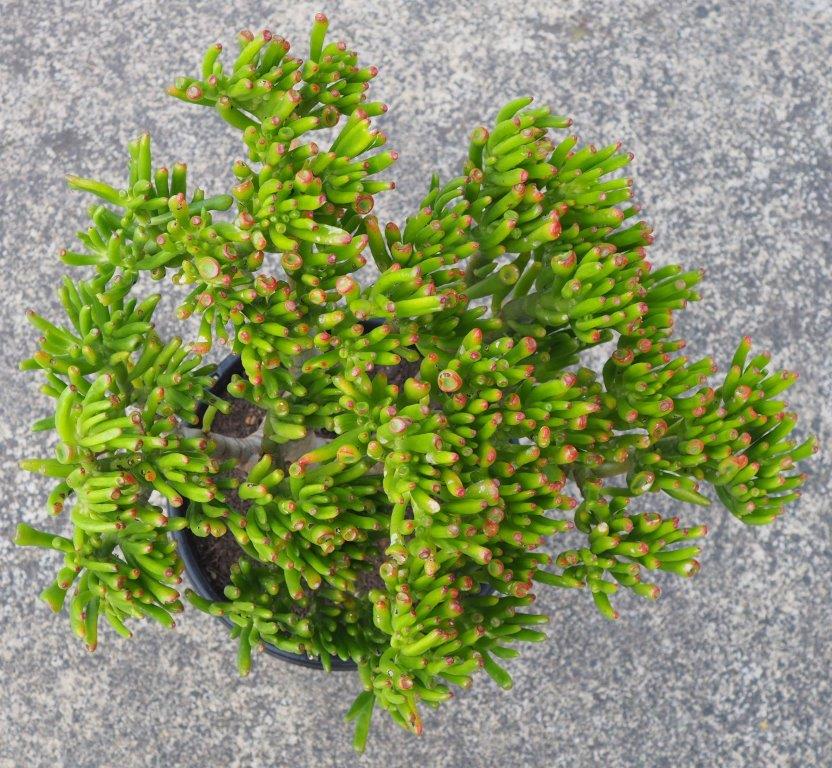
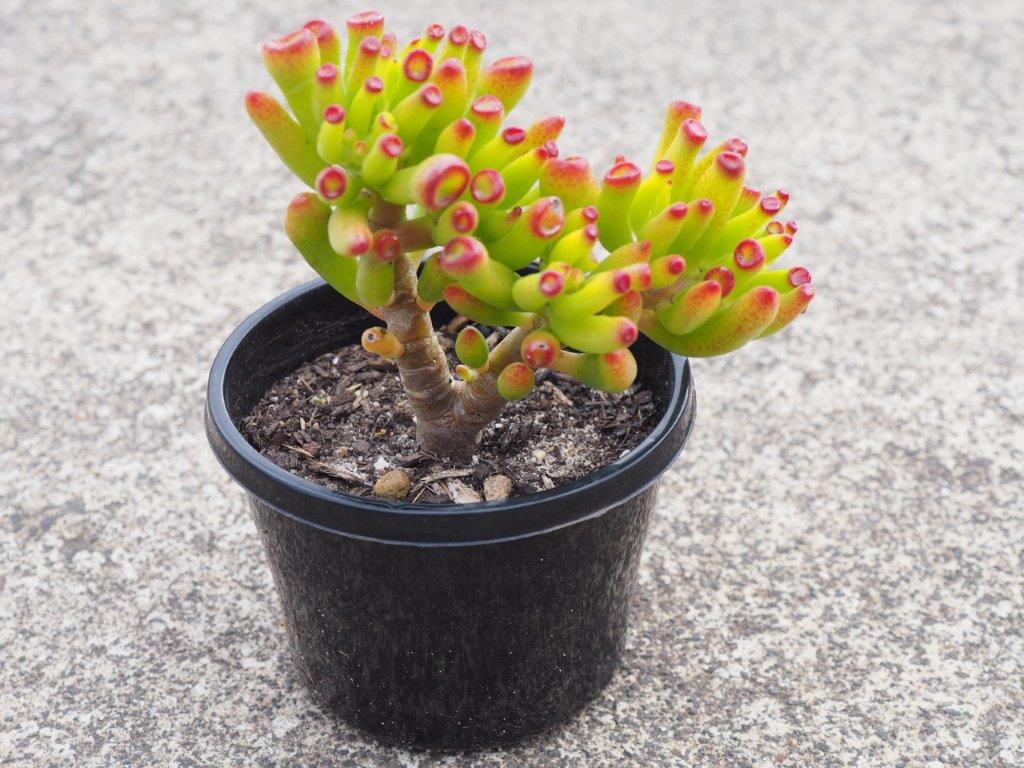
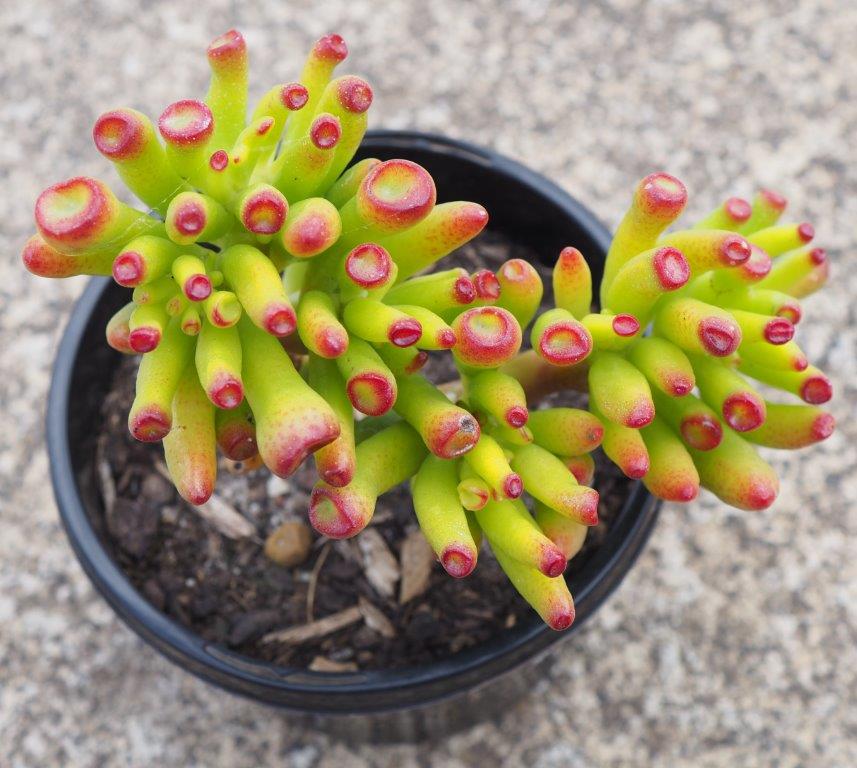
Crassula ovata 'Ladyfingers' :
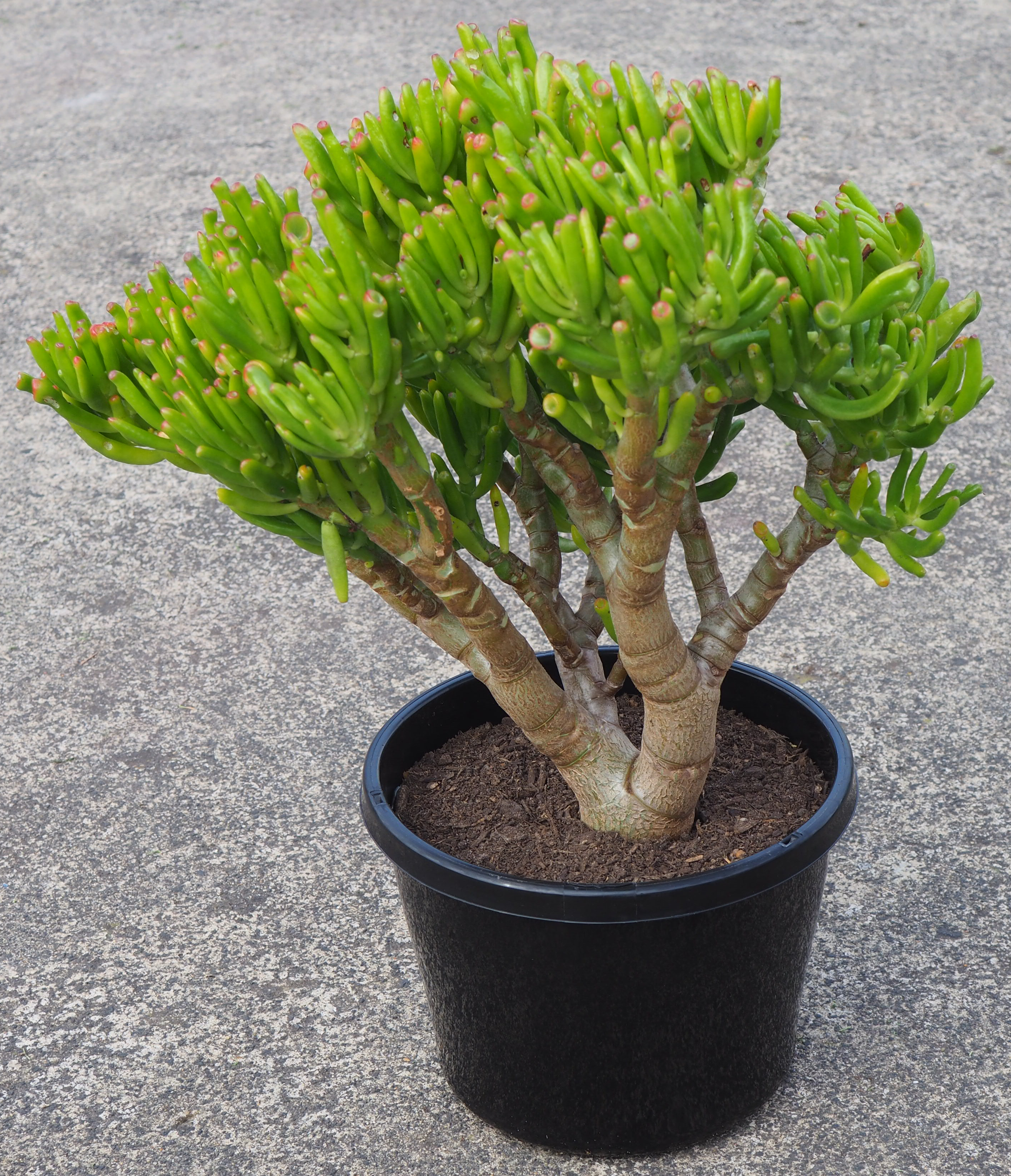
.jpg)
.jpg)
A very old plant :
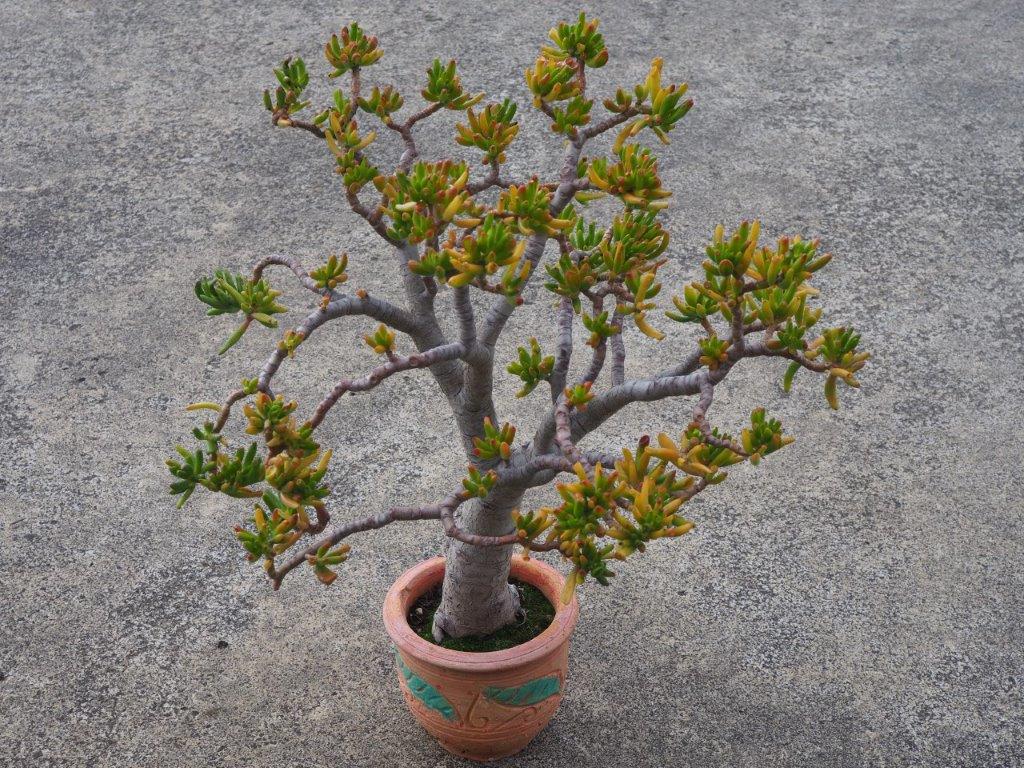
Photos Santino Rischitelli
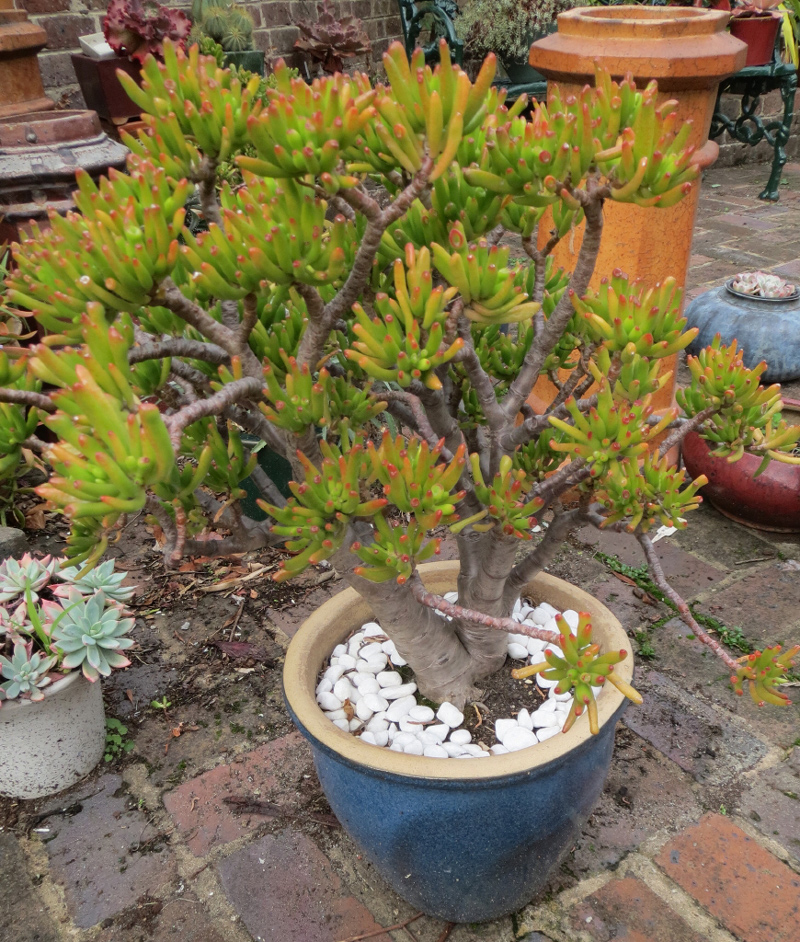
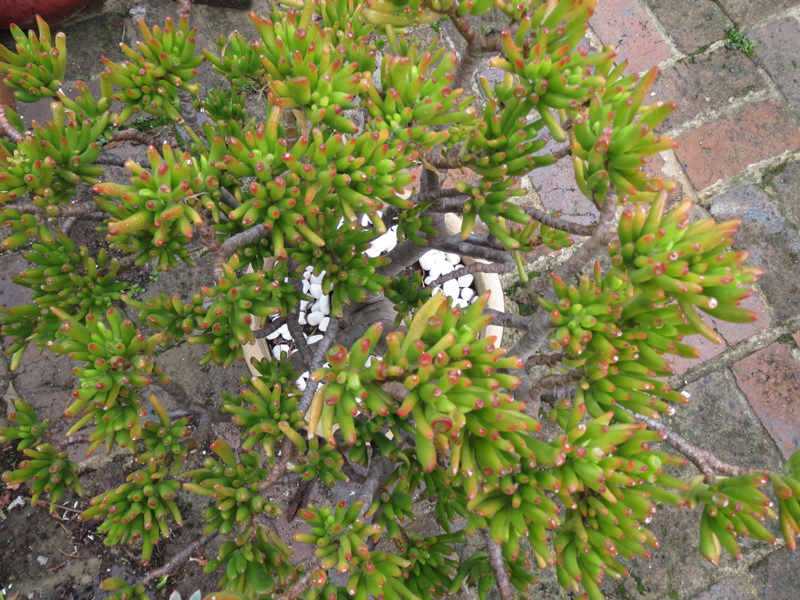
Photos Noelene Tomlinson
The leaves of C. ovata ‘Ladyfingers’ are a thinner version of those of C. ovata ‘Gollum’ :
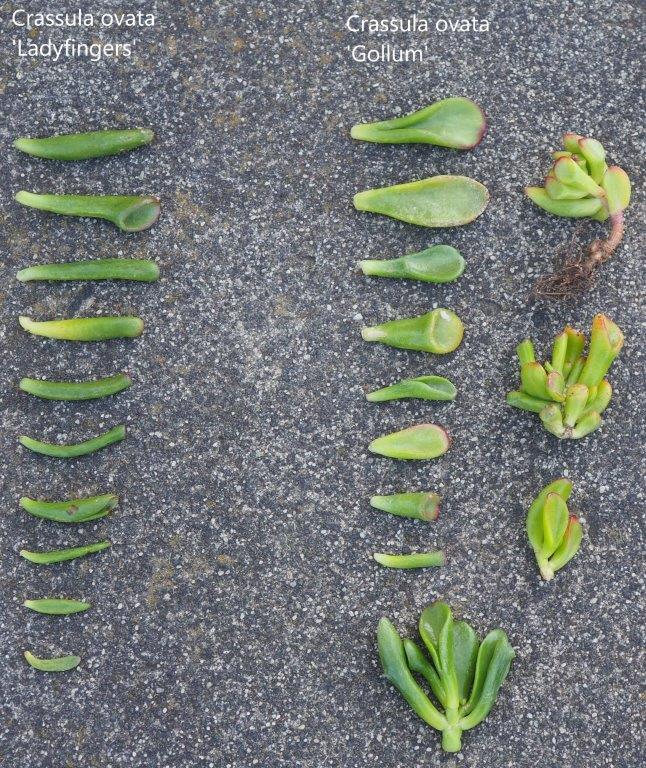
Photo Santino Rischitelli
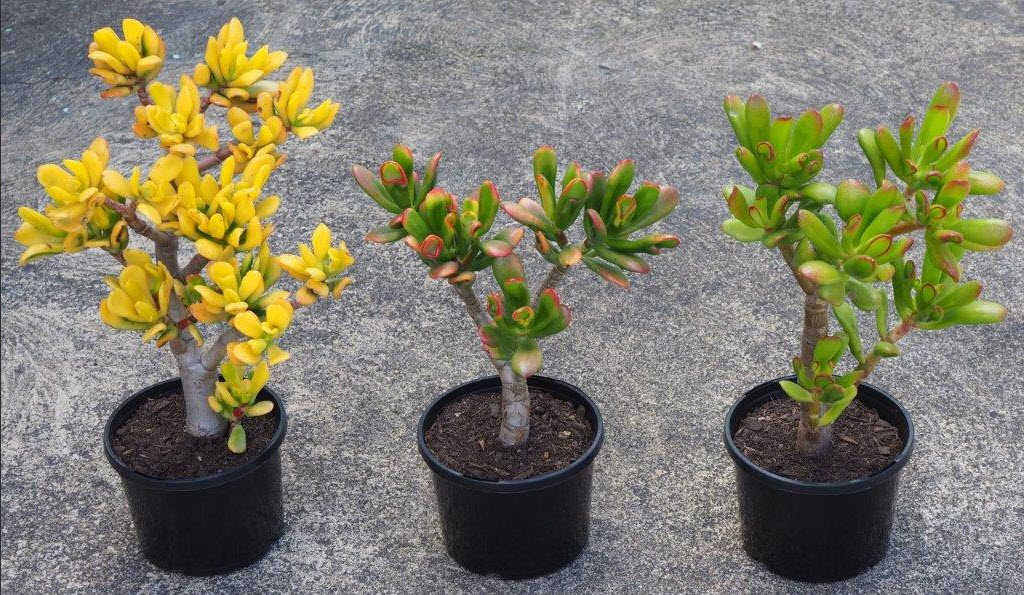
Crassula ovata ‘Red Coral’ in Australia - aka C. ovata ‘Red Horn Tree’ - a mutation of C. ovata ‘Hummel’s Sunset' :
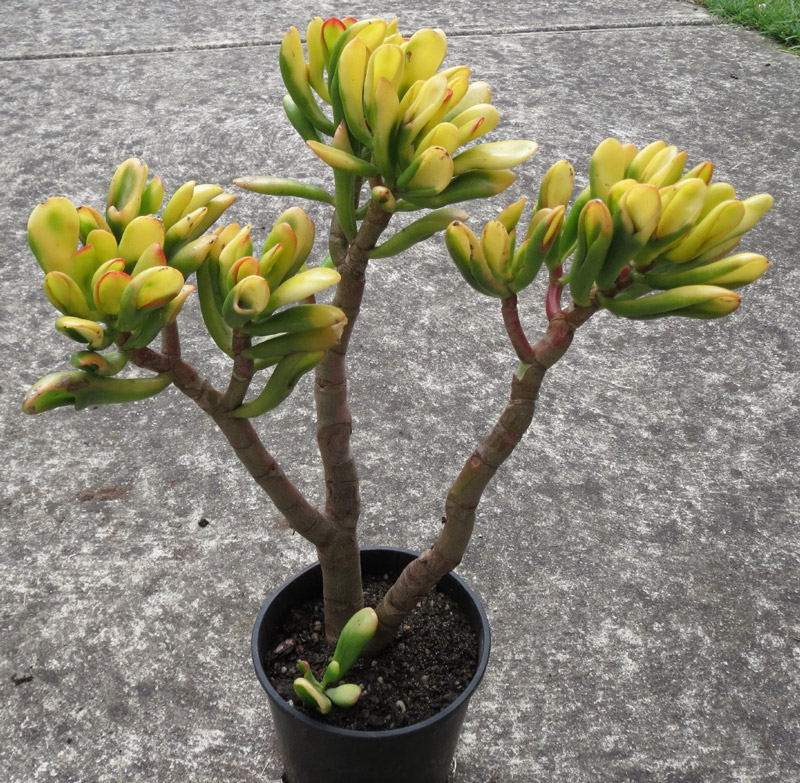
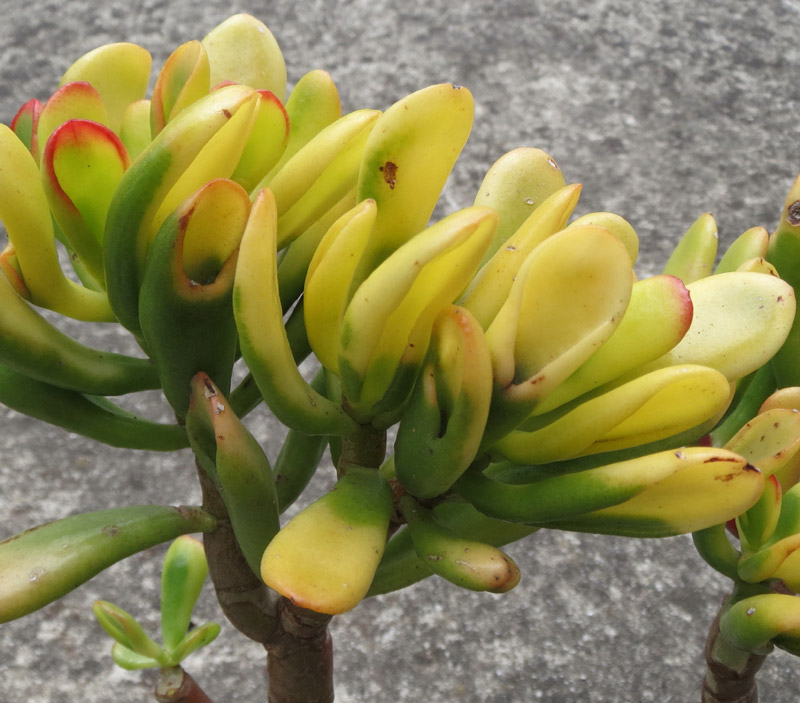
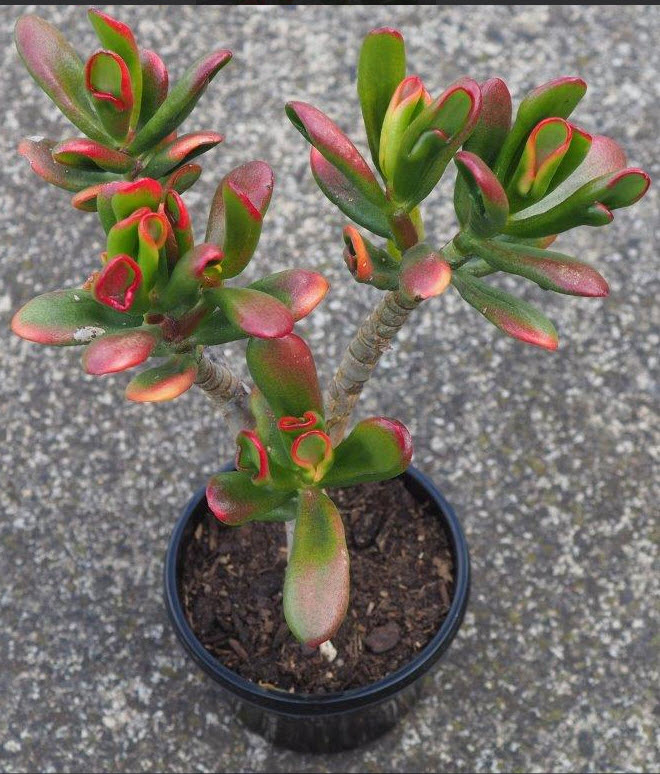
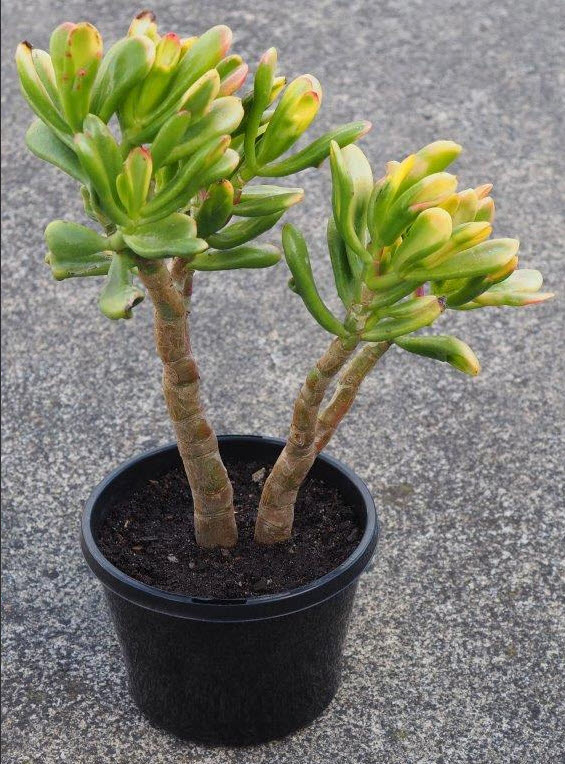
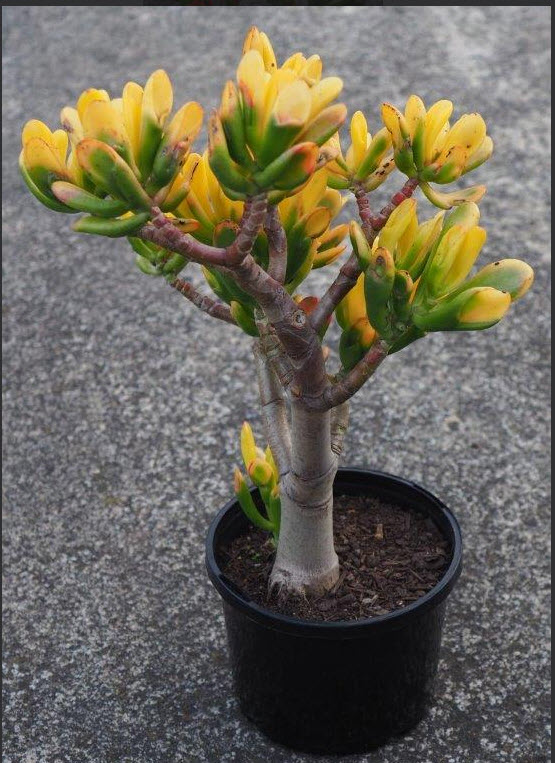
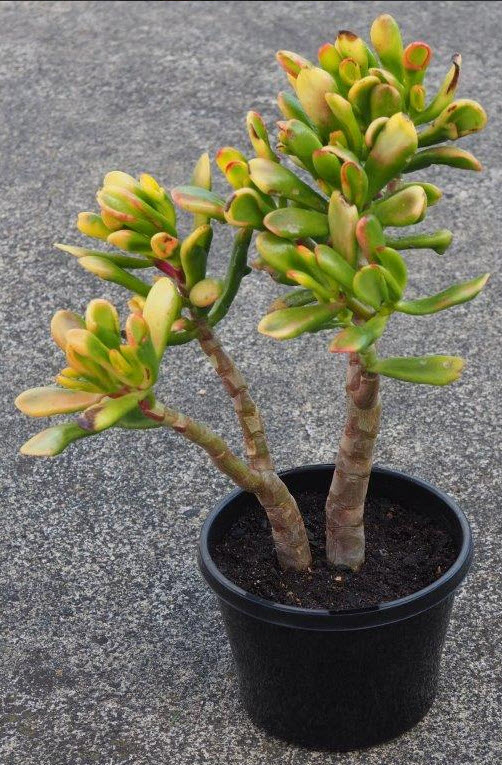
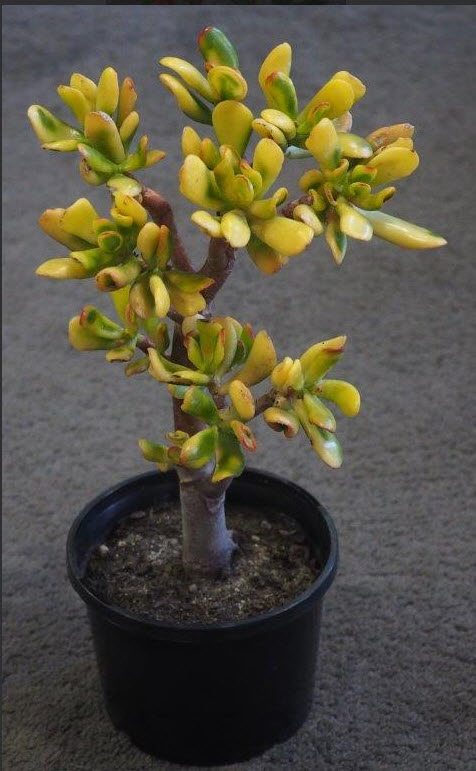
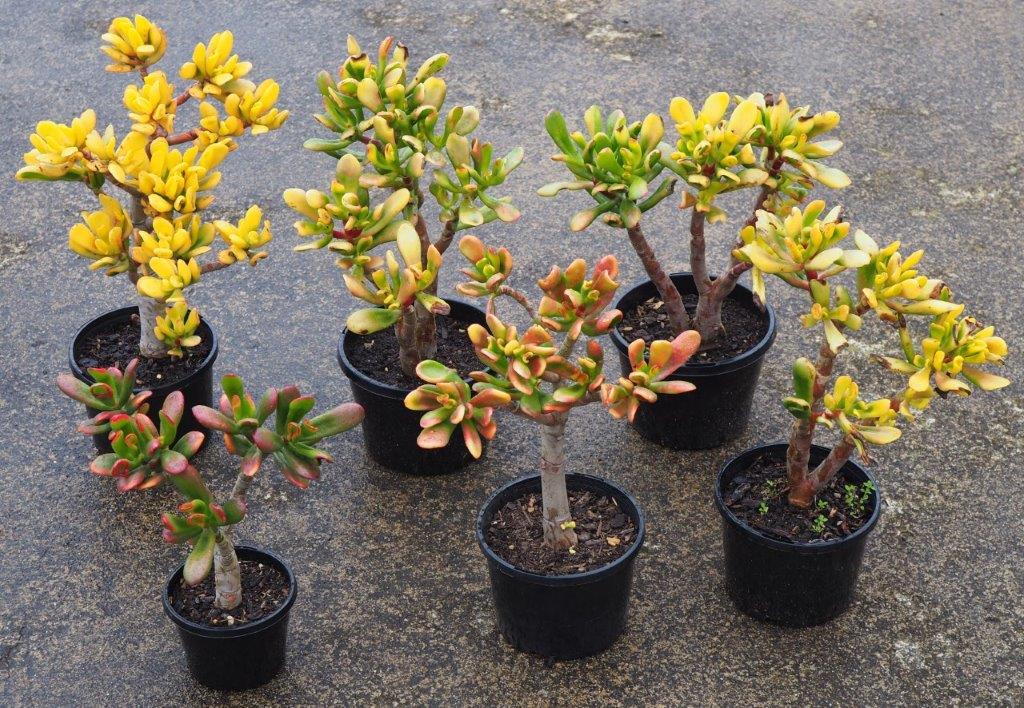
Left full sun, middle morning sun, right under shade cloth :
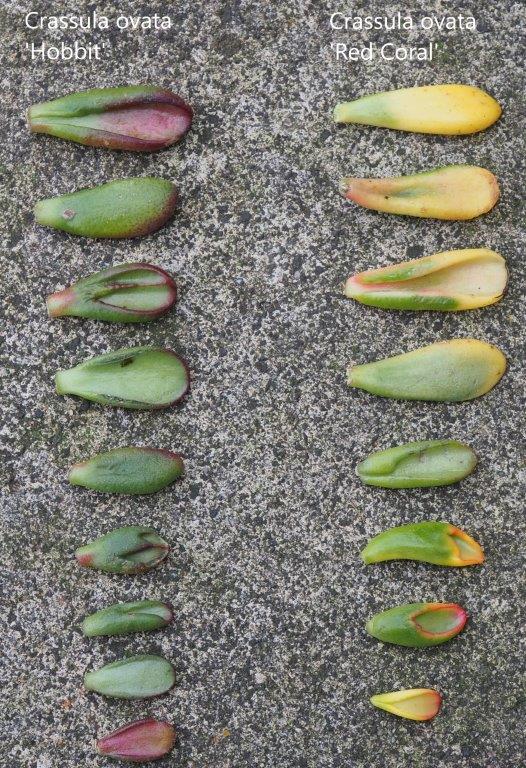
The leaves of C. ovata ‘Red Coral’ are similar to those of C. ovata 'Hobbit, however differ from the latter in being much more colourful as the preceding photos show :
C. ovata ‘Red Coral’ : 1 branch reverting to C. ovata ‘Hummel’s Sunset' :This suggests that C. ovata ‘Red Coral’ is a monstrous form of C. ovata ‘Hummel’s Sunset' :
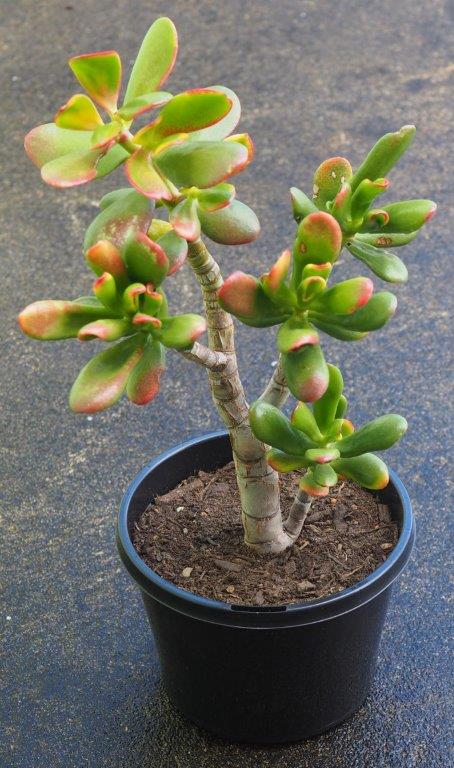
C. ovata ‘Hummel’s Sunset' :
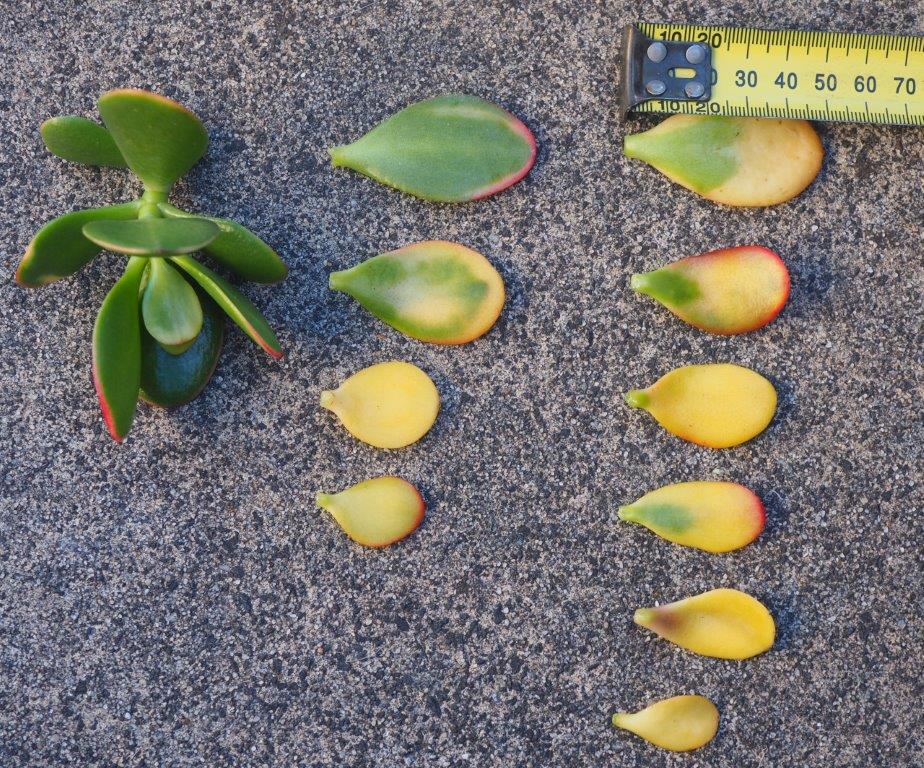
Leaf shapes of members of the C. ovata ‘Tolkien Group’ :
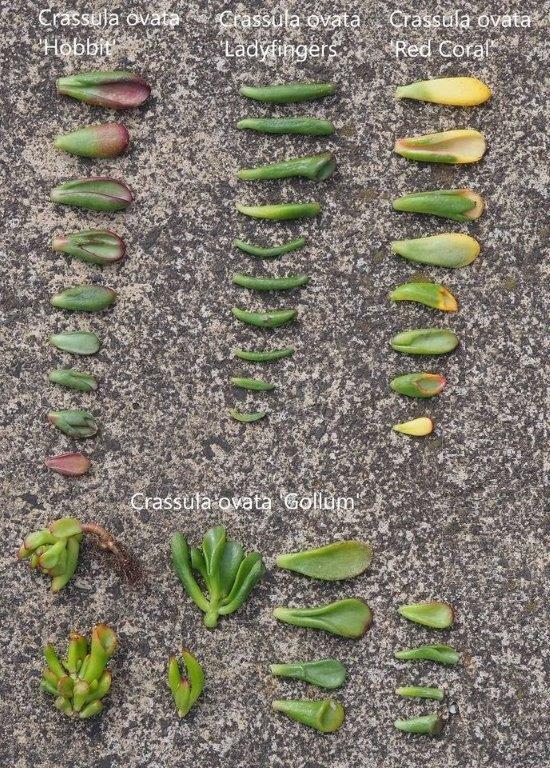
Photos Santino Rischitelli
In the case of the recently published Crassula ovata ‘ClaudeRill’ all these more or less differing leaf shapes appear on one and the same plant (Piante Grasse 46(3), 2026) !
Marcello Mastrorilli writes :
This report documents a clonal lineage of Crassula ovata that has been continuously observed for a period of approximately twenty-five years and maintained exclusively through vegetative propagation following the loss of the original specimen.
The lineage is characterized by the stable association of specific morphological traits, consisting of the persistent coexistence of different foliar morphotypes on the same individual, the recurrence of foliar structures derived from apical meristematic fusion, a marked waxiness of the foliar surface, and an early development of a rugose and deeply fissured periderm.
Observations conducted between 2021 and 2026 on clonal individuals belonging to two successive vegetative generations have confirmed the maintenance of the general morphological arrangement of the lineage, notwithstanding the standard quantitative variability in the expression of individual characters.
The distinctness of Crassula ovata 'ClaudeRill' is strictly defined by its primary diagnostic combination : stable structural heterophylly and recurrent apical leaf fusion. Secondary traits—such as marked foliar pruinosity and early periderm rugosity—are described herein solely to provide a comprehensive phenotypic profile (Holistic Phenotypic Description), without claiming individual diagnostic exclusivity for these secondary characters.
Origin of Crassula ovata ‘ClaudeRill’
The original plant was bought from a general nursery in 2001 in Bari as a ca 10 cm tall stem. Since then it was cultivated in an outdoor environment within the Adriatic region of Apulia (Italy), roughly corresponding to USDA hardiness zones 10a–10b. It exhibited a remarkable arborescent development of considerable dimensions, featuring a heavily lignified trunk and a deeply fissured cortical surface. Throughout the entire observation period, it manifested the simultaneous presence of different foliar morphotypes distributed across the same individual, a trait consistently recorded in the years prior to any documented traumatic event.
The original specimen was lost in 2021. Prior to its loss, lignified basal portions of the trunk were harvested and utilized to preserve the lineage exclusively via vegetative propagation. From this original material, seven clonal individuals were obtained and subsequently observed until 2026. The entirety of the observations reported in this document is derived exclusively from these individuals and the subsequent vegetative propagations obtained from them.
Original specimen 2019 :
.jpeg)
Original specimen 2021 :
.jpg)
Observations and evaluation criteria
Observations were conducted between 2021 and 2026 on seven clonal individuals derived directly from the original specimen.
The individuals were predominantly maintained in outdoor cultivation under ordinary, uncontrolled environmental conditions, without the employment of experimental protocols aimed at the artificial induction of the described morphological traits.
Throughout the observation period, the specimens were subjected to standard horticultural practices, including repotting, containment pruning, and vegetative propagation via cuttings. Subsequent propagations were obtained from both stem segments and leaf cuttings.
The observations encompass individuals belonging to the first clonal generation and the second clonal generation, cultivated under different exposure conditions, including:
- full outdoor exposure;
- partially shaded outdoor environment;
- semi-protected environment.
The reported morphological characters were verified during different growing seasons and subsequently upon the resumption of growth following pruning interventions.
Lignified cuttings obtained from the original material :
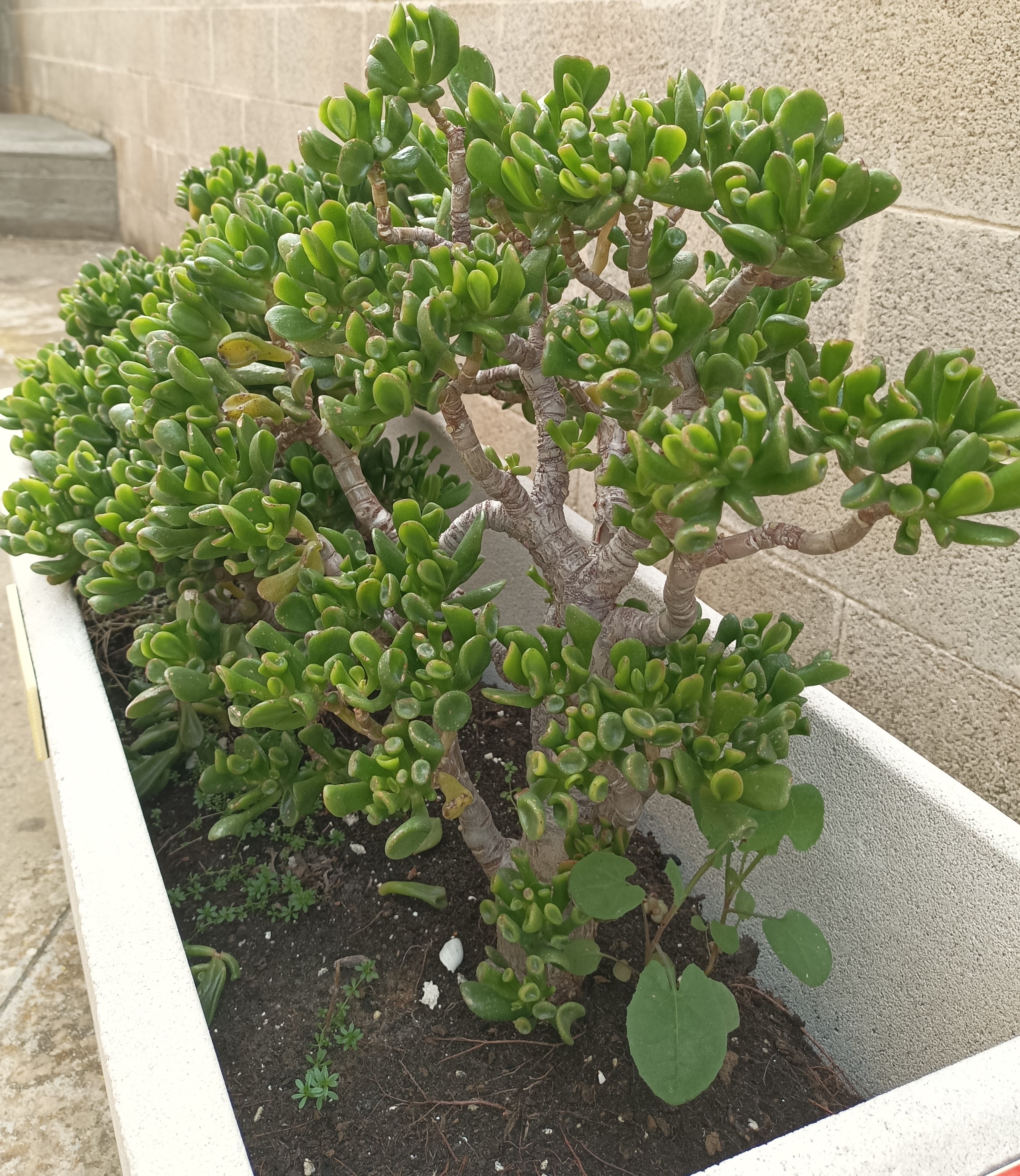
Growth habit
The cultivar exhibits a compact arborescent growth habit, with the progressive formation of a robust and heavily lignified main trunk.
Branching occurs irregularly, featuring vegetative axes that are frequently sinuous and nodulose. The internodes are moderately variable in length, contributing to an overall compact habit.
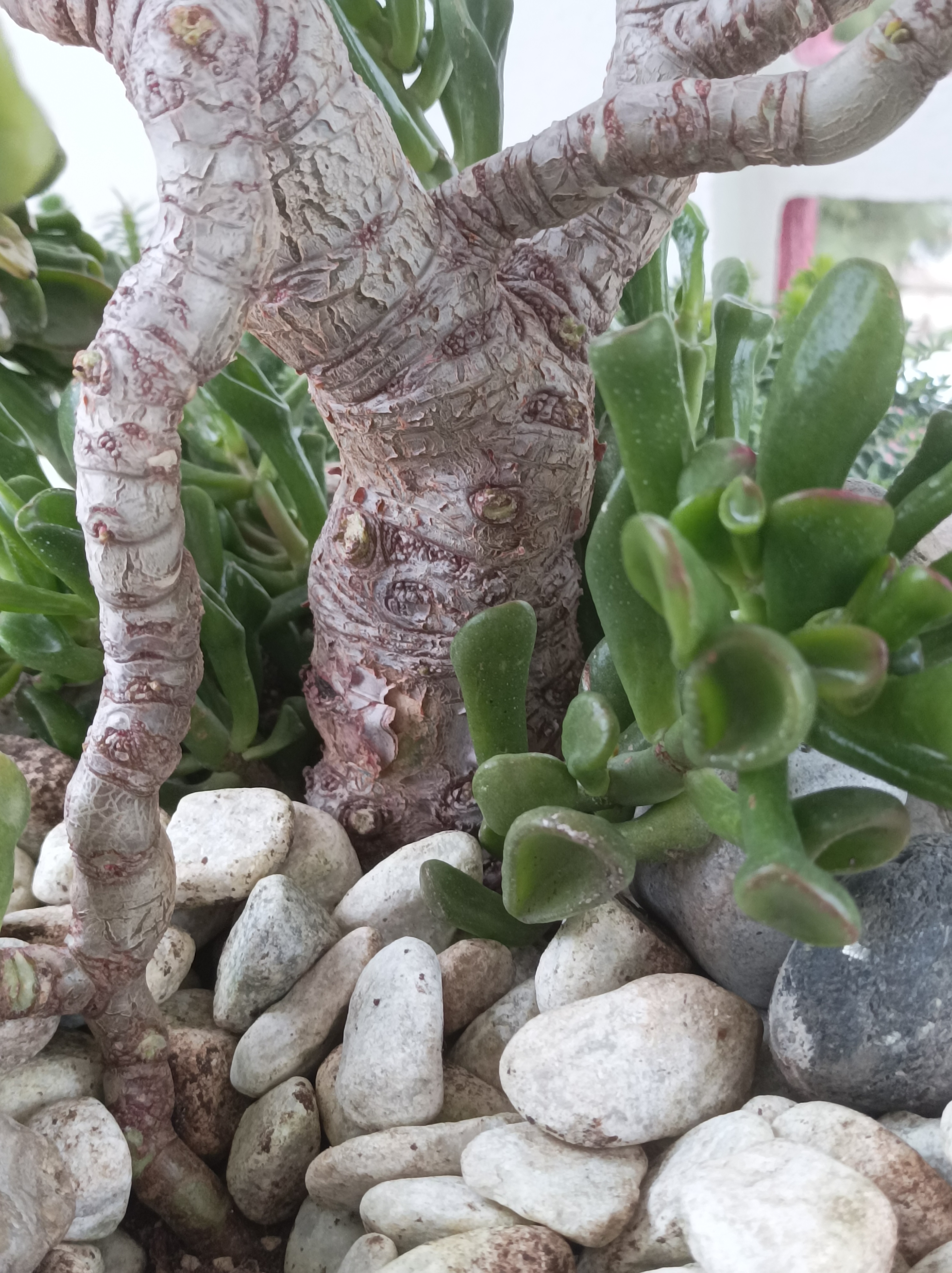
In mature specimens, the periderm develops early, assuming a deeply rugose and fissured appearance—a characteristic observed both in the mother plant and in the derived clonal individuals.
While not representing an independent diagnostic trait, this cortical conformation constitutes a recurrent morphological element of the clonal lineage.
Representative specimen of the first clonal generation :
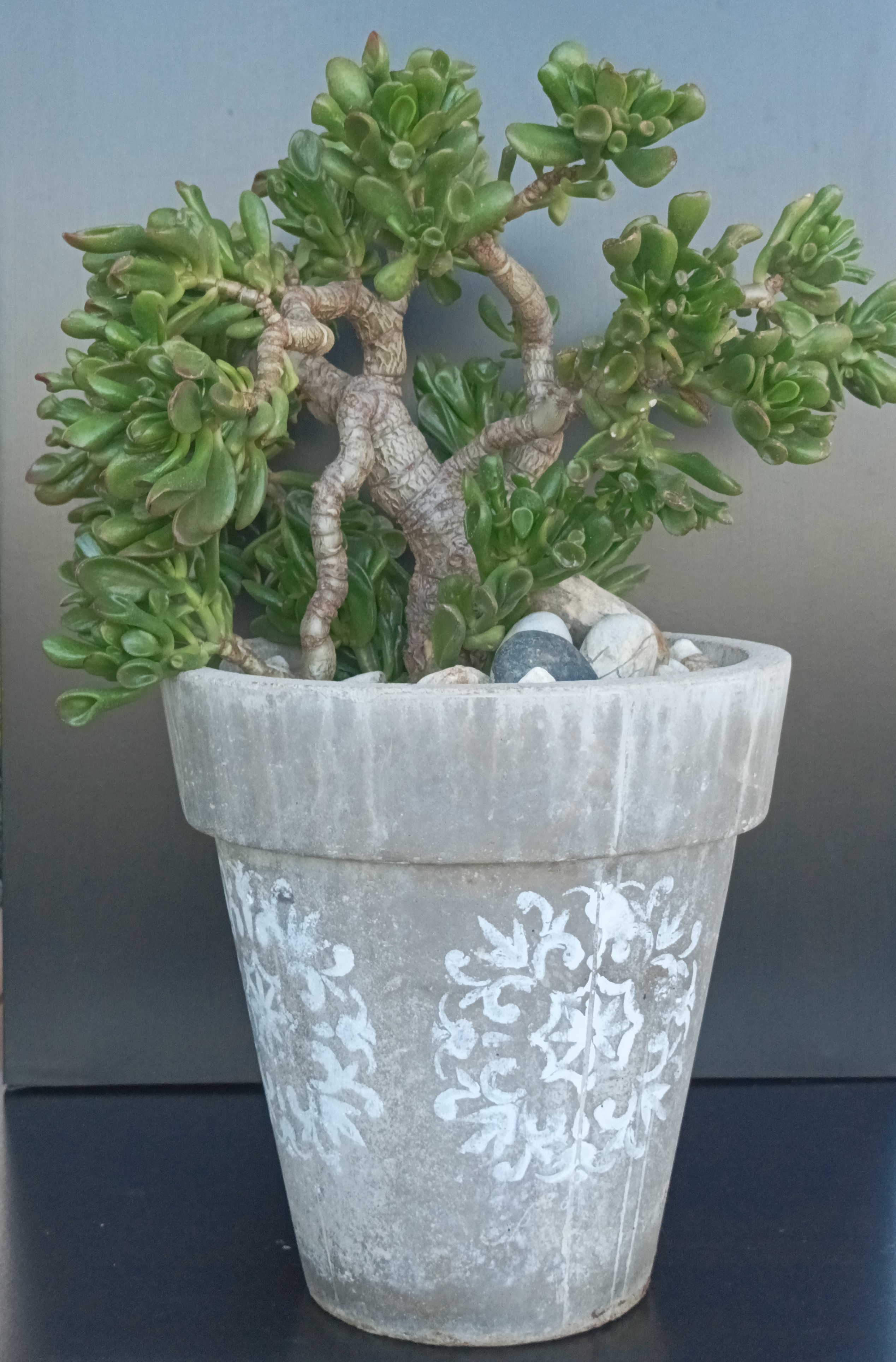
Detail of the periderm :
Primary diagnostic character: stable structural heterophylly
The primary distinguishing character of the cultivar consists of the stable coexistence of different foliar morphotypes on the same individual.
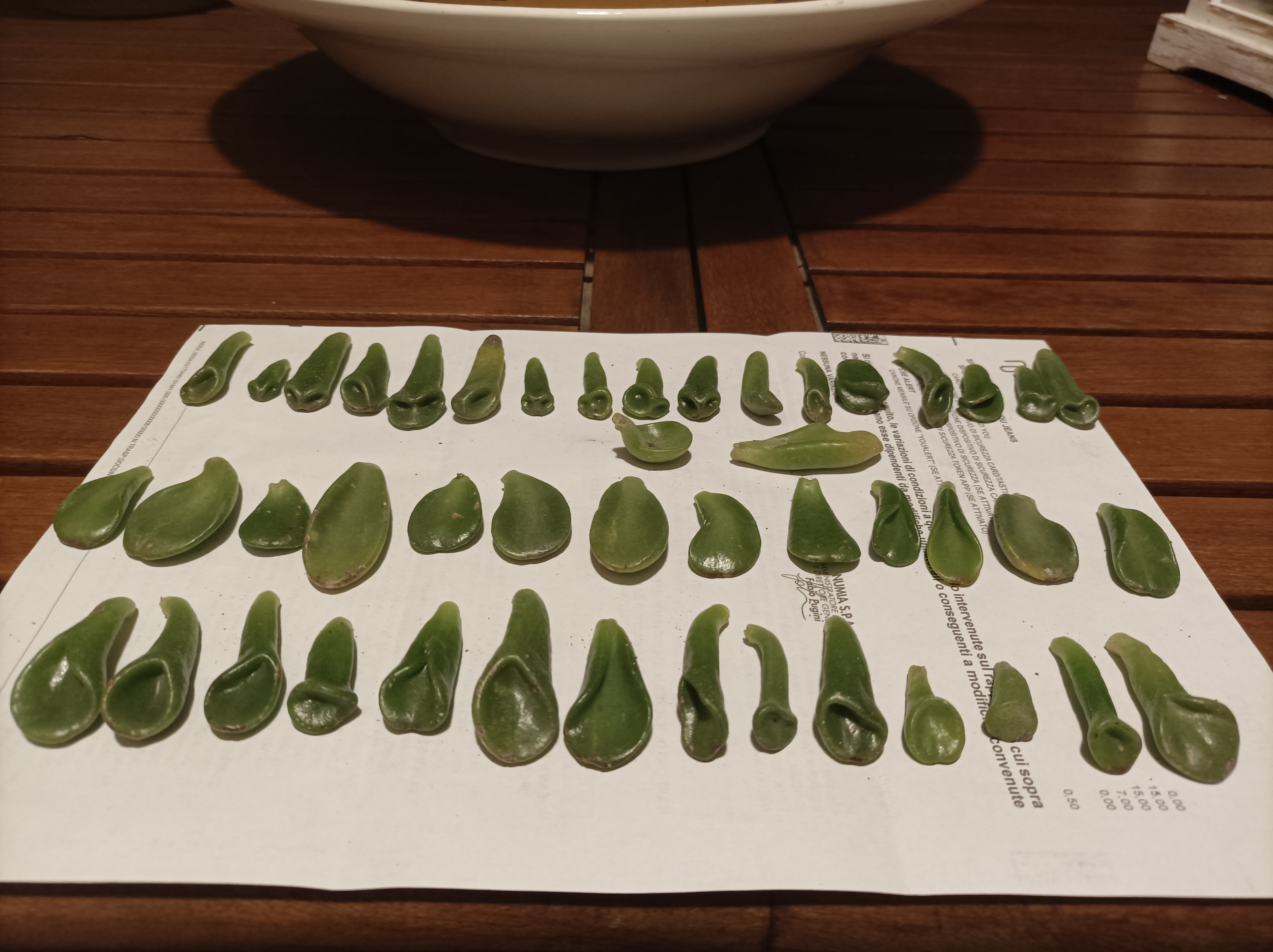
Throughout the observation period, three main morphotypes were consistently recorded:
- completely tubular leaves, corresponding to the morphotype commonly referred to as "Gollum";
- expanded leaves with an open apex, similar to the "Hobbit" morphotype;
- leaves with intermediate morphological characteristics between the two aforementioned forms.
The different morphotypes are not distributed across separate individuals, but stably coexist on the same plant and, frequently, along the same vegetative axis.
Their distribution does not follow a segregation attributable to specific branches or permanent sectors of the canopy, but constitutes a recurrent morphological pattern affecting the entire individual.
During the observation period, no clones were found to have stably reverted or evolved toward an exclusively "Gollum" or exclusively "Hobbit" phenotype.
The quantitative expressivity of individual morphotypes may vary in relation to the vegetative stage of the plant and environmental conditions, without altering the constant presence of the combined pattern.
The cultivar is therefore defined by the stable coexistence of the different foliar morphologies, rather than by the predominance of a single form. This character constitutes the primary diagnostic element of the cultivar.
Comparative chart of the observed foliar morphotypes :
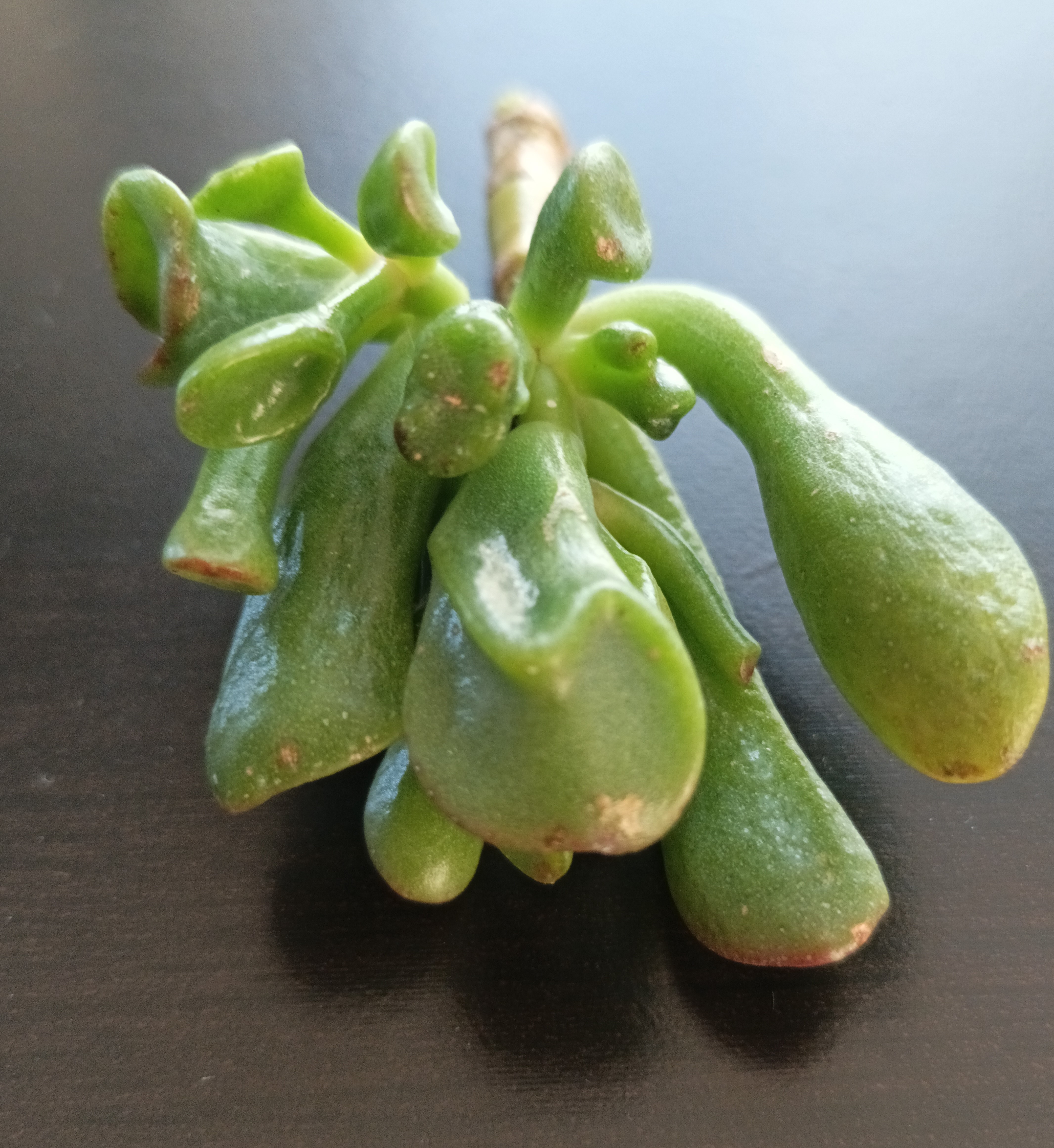
Detail of the foliar surface with marked waxy pruinosity :
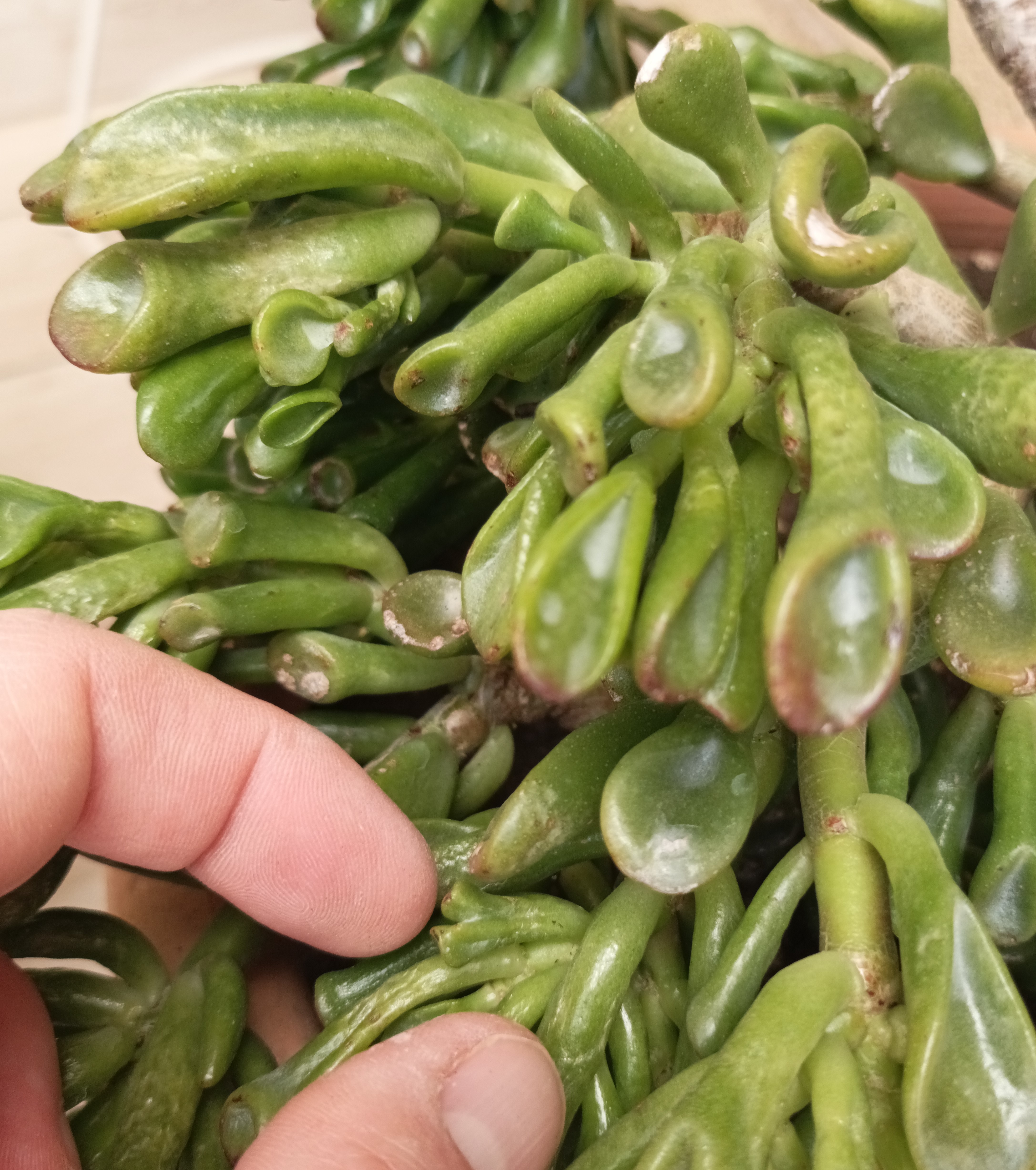
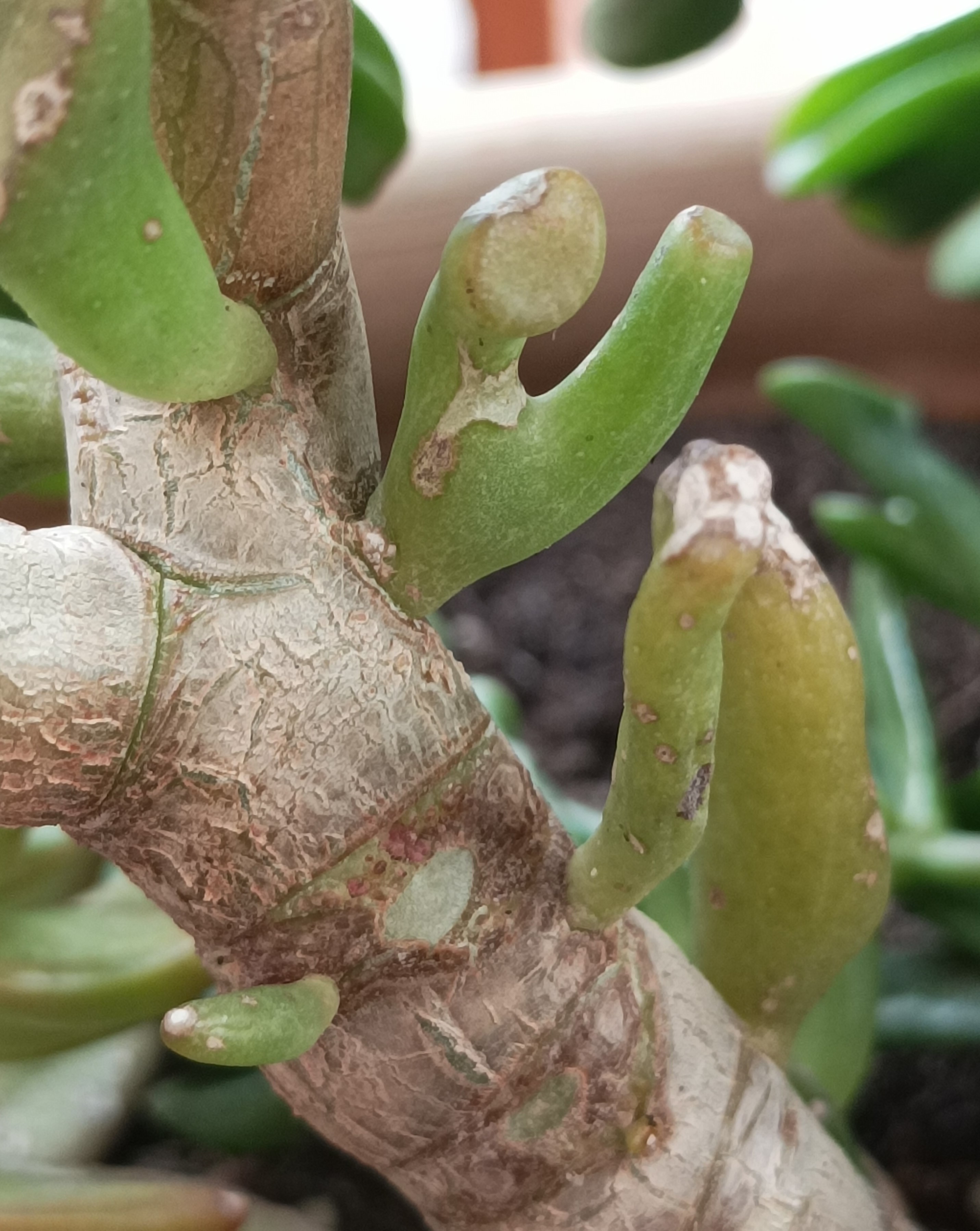
Associated diagnostic character: recurrent split apices
Throughout the observation period, the recurrent occurrence of leaves with split apices was documented. The split apex consists of an apical division of the leaf into two distinct terminal portions.
This morphology was observed across different growing cycles and in multiple individuals belonging to the same clonal lineage. The frequency of occurrence varies among individual specimens and growing seasons; however, the recurrence of leaves with split apices represents a characteristic associated with the cultivar.
Split apices does not constitute the sole distinctive element of the clonal lineage, but concur, together with the stable structural heterophylly, in defining the overall phenotype.
Foliar structure showing a split apex :
Further example of a split apex :
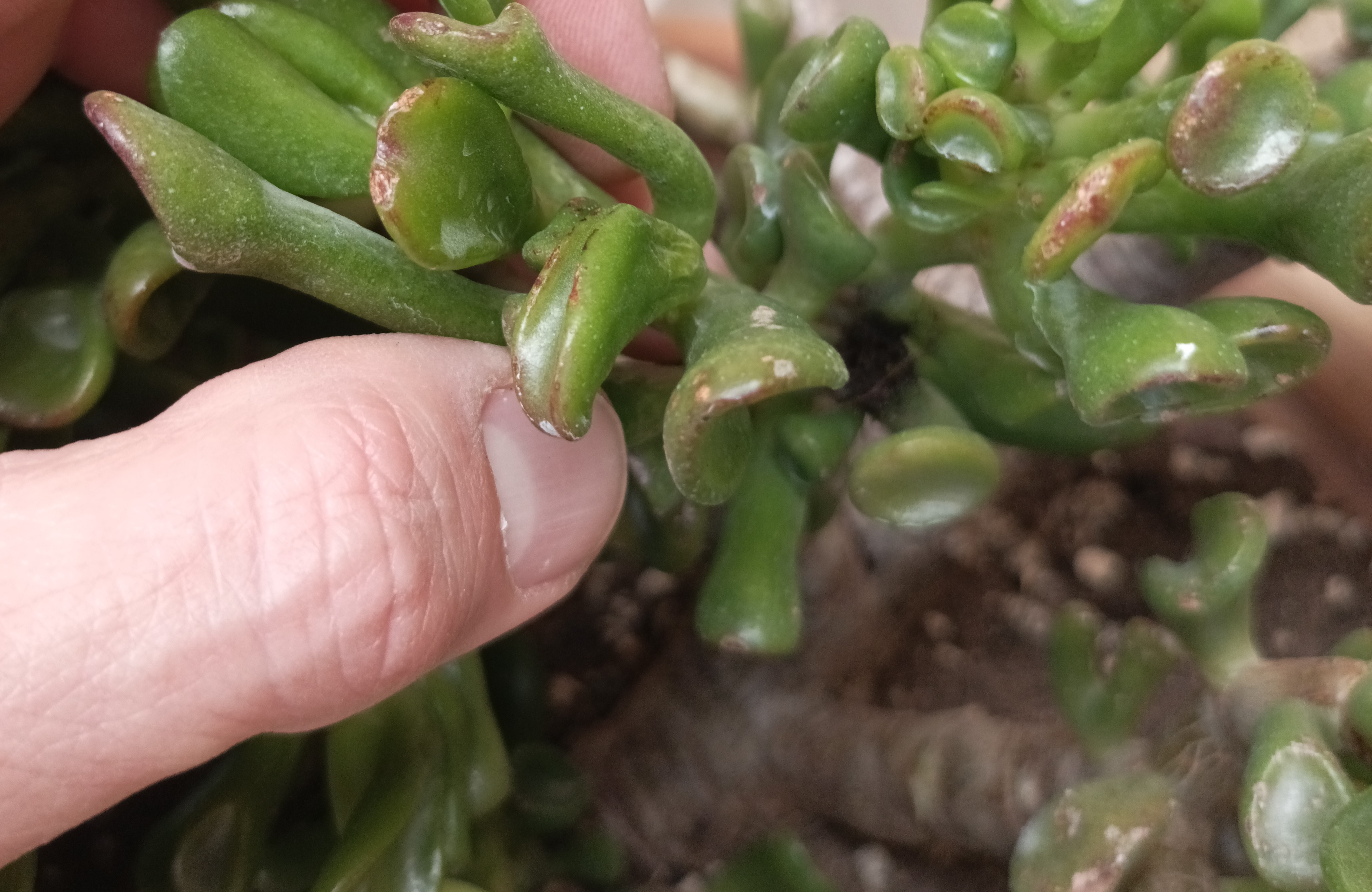
Split apex with evident division of the lamina :
Accessory morphological characters
The foliar surface is regularly smooth and covered with a marked waxy pruinosity, which is responsible for the matte appearance and the distinctive texture of the laminae.
Occasional twisting of the leaf lamina and asymmetric deformations have been observed in numerous shoots; these are not attributable to mechanical damage, phytopathies, or transient physiological disorders.
These manifestations appear discontinuously and do not constitute independent diagnostic characters; however, they contribute to defining the overall appearance of the clonal lineage.
Foliar pigmentation
Foliar pigmentation exhibits a marked dependence on environmental conditions.
Individuals grown in full sun exposure and subjected to significant temperature fluctuations frequently develop red-purple anthocyanin pigmentation along the leaf margin and, under conditions of higher light intensity, also across part of the lamina surface.
In contrast, under conditions of lower insolation, the foliage maintains a predominantly green coloration.
Since this character is strongly influenced by cultivation conditions, it is not considered diagnostic for the purpose of cultivar identification.
Differential diagnosis
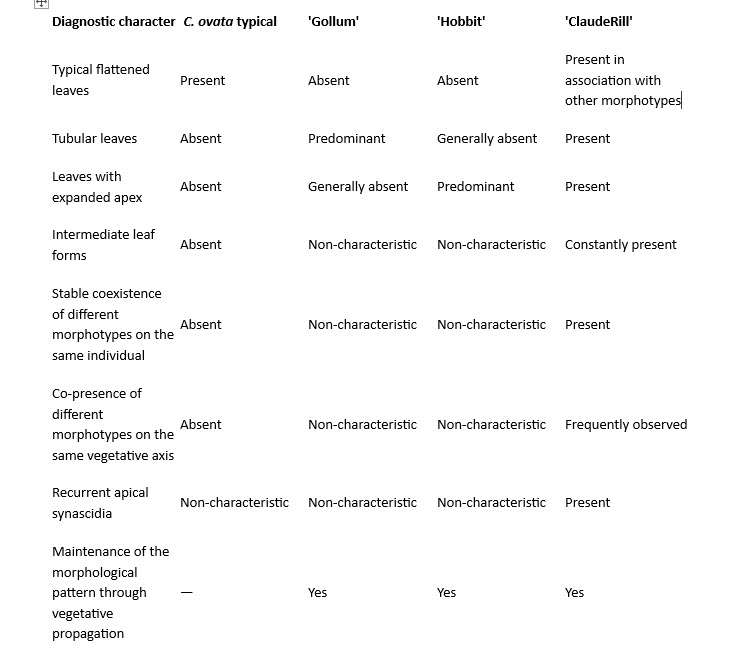
The distinctiveness of Crassula ovata 'ClaudeRill' is defined by the stable association of the diagnostic characters reported in Table 1 and described in this report. No single character, considered individually, is assumed as an exclusive identification element; the cultivar is recognizable by the constant expression of the complex of characters as a whole. None of the comparison cultivars are defined by the stable association of the characters observed in the proposed clonal lineage. The distinctiveness of the cultivar therefore derives from the simultaneous expression of the entire complex of diagnostic characters, rather than from the isolated presence of any single one.
Comparative table of main diagnostic characters:
Uniformity and stability of the clonal line
Following the loss of the original specimen in 2021, the clonal line has been preserved exclusively through vegetative propagation. The observations reported in this document were conducted between 2021 and 2026 on individuals belonging to the first clonal generation and to subsequent propagations derived from that generation. Throughout the entire observation period, the clonal individuals maintained the same general morphological pattern, preserving the combination of diagnostic characters described in this report. In particular, the persistent coexistence of the different leaf morphotypes—comprising tubular leaves, expanded leaves, and intermediate forms—was confirmed in all observed individuals, with no evidence of a stable transition towards phenotypes exclusively attributable to the cultivars commonly known as 'Gollum' or 'Hobbit'. Similarly, the occurrence of leaves with split apices was documented across different clonal individuals belonging to the line, albeit with a variable frequency of expression between individual specimens and across different vegetative cycles. The differences observed among the individuals relate exclusively to the degree of quantitative expression of individual characters and fall within the normal phenotypic variability typically found in vegetatively propagated cultivars. In contrast, no modifications to the overall morphological pattern or loss of the diagnostic characters defining the cultivar were observed. Observations include individuals grown under different exposure conditions, including outdoor cultivation, partially shaded environments, and semi-protected environments. In all cultural contexts, the preservation of the general morphological pattern of the clonal line was confirmed. Likewise, the diagnostic characters were observed both during normal vegetative growth and following pruning interventions, in correspondence with subsequent new growth.
Conclusion :
The cultivar Crassula ovata 'ClaudeRill' is distinguished from all other currently known cultivars of Crassula ovata by the stable coexistence of the following character combination:
- simultaneous production of tubular leaves, expanded leaves, and intermediate forms on the same individual;
- frequent co-presence of the different morphotypes along the same vegetative axis;
- absence of any stable reversion or evolution towards an exclusively tubular or exclusively expanded phenotype;
- recurrence of leaves with split apices observed across different clonal individuals and in successive vegetative cycles;
- maintenance of the identical morphological pattern in subsequent generations obtained through vegetative propagation.
None of the characters listed above, considered individually, is assumed to be an exclusive identifier. The distinctiveness of the cultivar derives from the constant expression of the entire complex of diagnostic characters, the combination of which has proven stable throughout the entire period of observation.